
Last updated November 16, 2026
 Wrought iron
 Wood & steel frame
 Farm & ranch
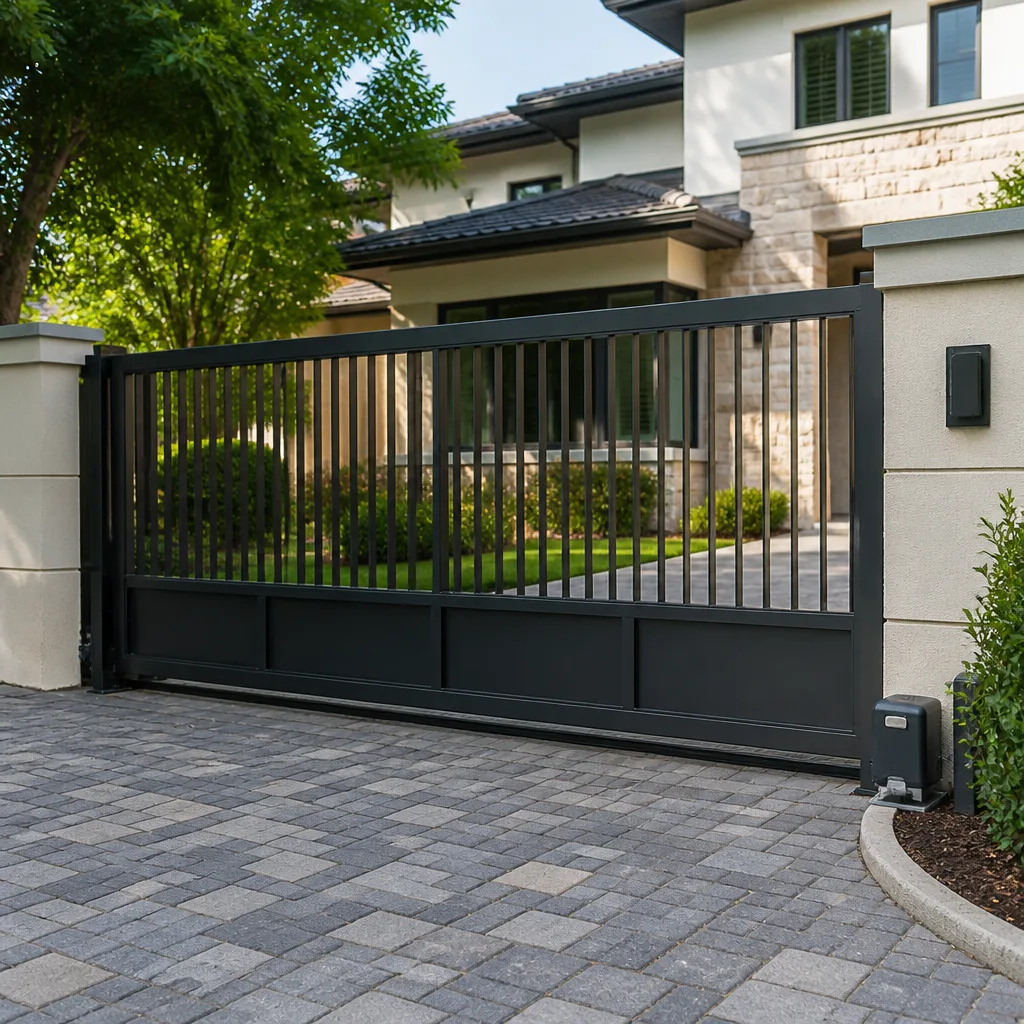 Sliding driveway gates
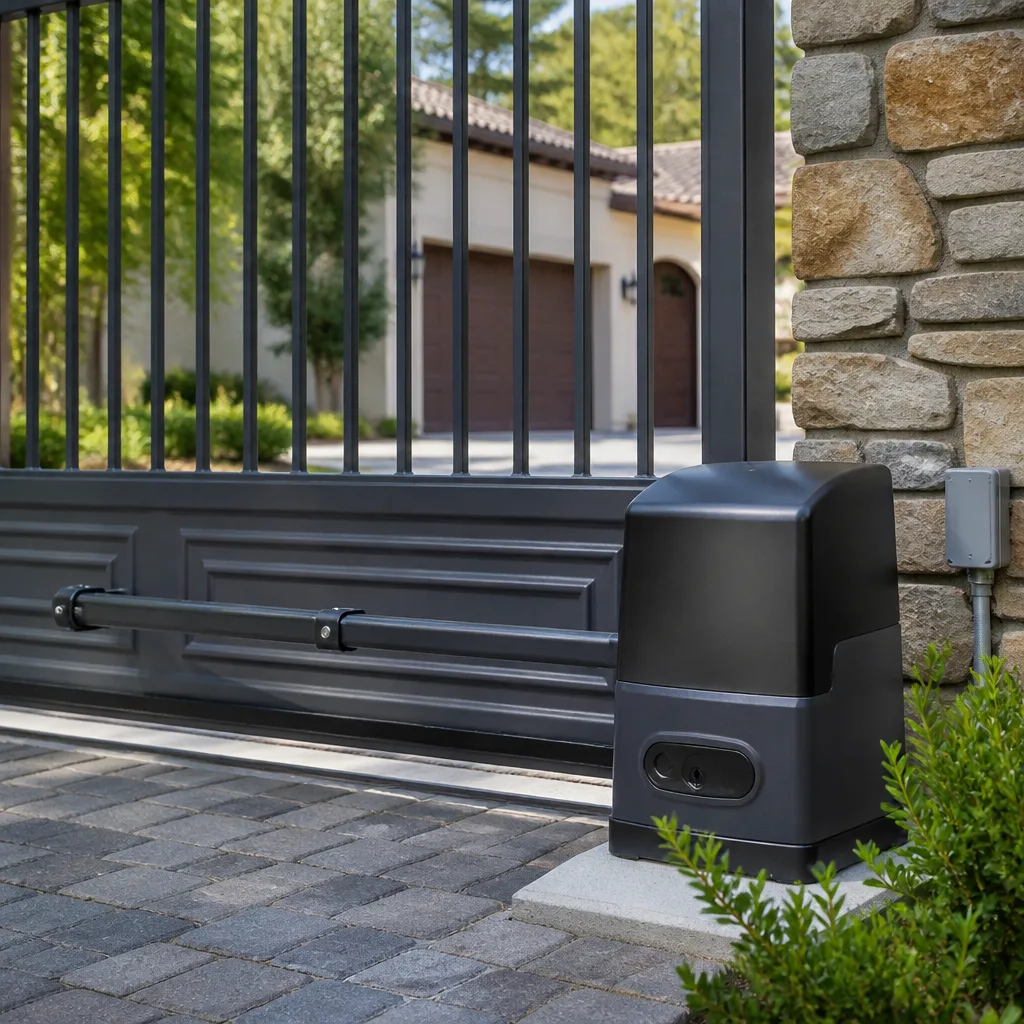 LiftMaster operators
Free on-site gate assessment - hinges, posts, and your LiftMaster or Nice gate operator checked before anything is quoted
The assessment is free and the quote is the invoice.
Get your free estimateSeasonal Gate Repair Care for Joliet: Year-Round Homeowner’s Guide
Most people assume a gate that quits working in February simply failed in February. It didn’t. It failed sometime in October, or maybe September, and spent the winter quietly getting worse. That’s the counterintuitive part of gate ownership in northern Illinois: the damage happens in one season and the bill shows up in the next. Joliet sits in a climate that stresses a gate system through four distinct cycles every year, and each one writes a message the next one delivers. Learn to read those messages and you’ll spend far less on repairs over the life of your gate. This guide walks through what each season does, what to check, and what to leave to a specialist.
Quick Answer
Seasonal gate care in Joliet means adjusting an automated gate before winter, inspecting footing and hardware after the ground thaws, watching operator behavior in summer heat, and keeping gate travel clear during storm season. Most emergency gate repairs we see in this region trace back to a missed adjustment in the season before, not to a sudden mechanical failure.
Our technicians have up to 13 years of experience with electric and automated gate systems, and the pattern holds: the homeowner with a dead operator in January usually had a warning in October.
Styles & brands we work with
- Wrought iron
- Wood & steel frame
- Farm & ranch
- Sliding driveway gates
- LiftMaster operators
Table of Contents
- Why Joliet’s Four Seasons Hit Gates Harder Than You’d Think
- Fall Prep: What to Adjust Before the First Hard Freeze
- Freeze-Thaw Cycles and Will County Clay: The Footing Problem
- Summer Heat and Your Electric Gate Operator
- Spring Inspection: Seven Checks Before Full Automatic Operation
- Storm Readiness: Locking a Gate Without Damaging the Operator
- Common Mistakes to Avoid
- Frequently Asked Questions
Why Joliet’s Four Seasons Hit Gates Harder Than You’d Think
A gate is a surprisingly precise machine bolted to something that moves. The panels, hinges, operator arm and post all operate within tolerances measured in fractions of an inch, and every piece of that assembly expands, contracts or shifts with the weather. Joliet gets a full four-season cycle with hard winter freezes and hot, humid summers, which is close to the worst possible combination for an automated gate.
Consider what a gate actually has to tolerate in a single year here. In winter, the ground beneath the post footing goes through repeated freeze-thaw cycles. In spring, the soil loosens and settles. In summer, metal panels and operator housings expand in direct sun and the electronics inside contend with heat they weren’t designed to dismiss easily. In fall, everything contracts again as the temperature drops, and any slop that developed in a hinge or limit setting becomes a real problem.
In our experience, the single most misdiagnosed gate problem in Joliet is a “failing motor” that turns out to be a moving post. Homeowners call because the gate reverses halfway, drags at one end or stops short of fully closing. The operator gets blamed. Often the post footing has migrated a fraction of an inch over the winter and the limit switches, which are set to a fixed travel distance, now cut off too early or too late. No amount of motor replacement fixes that.
There are neighborhoods where this shows up constantly. The clay-heavy ground that makes up much of Will County swells when wet and shrinks when dry, and a post footing set into it takes a slow ride every year. Tornado-adjacent geology aside, much of the residential gate population around the Cathedral Area, West Jefferson and the older lots near the river handles footing movement differently than the newer subdivisions east of Route 59.
The good news: all of this is manageable. It just has to be managed on a calendar, not as a reaction.
Fall Prep: What to Adjust Before the First Hard Freeze
Fall is the most important maintenance window on a Joliet gate calendar, and it’s the one most homeowners skip. Everything you do in October reduces the odds of a winter repair call, and the adjustments are specific to automated gates.
Before the first hard freeze, here’s what a fall prep visit should cover on an electric gate:
- Re-set the limit switches. Northern Illinois freezes can arrive suddenly, and the operator’s travel limits should be verified against a mechanically clean gate, not a gate with a slightly worn hinge. We set limits in fall so the operator knows its travel on a cold morning.
- Lubricate hinge points and the operator arm pivot. Dry, cold metal on cold metal is the main cause of creeping drag. The right lubricant depends on the gate type and the operator, which is why we check the assembly rather than apply a generic spray.
- Check the operator’s battery backup. Many residential operators ship with a battery designed to hold the gate operational through a power loss. Batteries age quietly. Fall is the time to test whether the gate can still complete its cycle on battery alone, before the day a storm takes the power down.
- Inspect the safety edges and photo-eyes. These are the parts that stop the gate on contact or when something crosses the path. Cold weather stiffens rubber edges and can crash the photo-eye bulbs. Testing both in fall beats discovering them during a January freeze.
- Look for footing movement. Any crack radiating from the post base, or a gate that no longer hangs level, is a footing signal. Catching it in fall gives you time to schedule the work before the ground gets hard.
- Clear the travel path. Fallen leaves, standing water and lawn debris interfere with loop detectors and photo-eye beams. Keep the path clear all winter.
Most of that is a walkthrough a homeowner can do alongside a specialist, and it’s far less expensive than a mid-winter service call. When we’re out for gate repair, we routinely find that the fall check list was the only thing missing.
Freeze-Thaw Cycles and Will County Clay: The Footing Problem
Here’s what’s happening under your gate post in a Joliet winter: the soil freezes, expands and lifts the footing slightly, then thaws and settles. Do that repeatedly and the post slowly migrates. Over a hundred cycles, the cumulative movement is enough to throw off limit switches and cause a gate to bind.
Will County’s clay soil makes this worse. Clay holds moisture, swells when it freezes and shifts when it thaws, and it doesn’t drain quickly. A post footing set into wet, clay-heavy ground takes more movement than one set into sandy, well-drained soil, which is why so many automated gates in this area need footing attention rather than just operator repair.
The inspection check that catches it early is simple: look at the gap between the post and the ground. A healthy concrete footing holds the post tightly. A footing that’s started to move typically shows up as:
- A visible crack ring around the post base where concrete meets soil
- A gate that hangs slightly out of level, or that closes harder on one side
- A post that no longer sits straight when you sight down its length
- Newly exposed concrete where the footing has lifted or settled
- A gate that drags at a different point than it did last year
If you see any of these, don’t keep adjusting the operator to compensate. Adjusting limit switches to chase a moving post masks the problem and eventually leaves the gate trying to close against the ground. Footing correction is a different job from operator repair, and it’s the one that actually solves the problem. Ask about it specifically when you call anyone out.
Correct footing depth is the permanent fix, and it’s worth confirming before a new gate is installed: the footing needs to be set at proper depth for the post, not simply poured to grade.
Summer Heat and Your Electric Gate Operator
Summer in Joliet does something homeowners rarely consider: it changes the physical length of the gate itself. Metal fence panels and gate frames expand in direct summer sun, and a gate that fits perfectly and closes cleanly at 60 degrees can bind at the latch point at 92 degrees.
More importantly, heat changes the operator’s world. Ambient temperature affects the control board and the motor drawing current, and the limits you set in cooler weather may not match the gate’s travel in the hottest part of the day. This is the “thermal expansion” problem. A gate that stops just short of closed at 2pm in July may well close fine by 7pm.
What to watch for in summer:
- Intermittent reversing or stopping during the afternoon heat. Note the time of day and the outdoor temperature when it happens; it tells us a lot.
- Operator housings hot to the touch. Most modern operators are built to run warm, but a housing that’s noticeably hotter than usual can point to a motor laboring against drag.
- Control board faults that come and go. Boards on operators like BFT and Linear models can throw intermittent errors when internal temperatures climb, particularly in direct sun without airflow.
- Grinding or uneven swing that only appears in the heat. That’s usually expansion of the gate frame against a hinge out of adjustment, not the motor.
Where the operator sits matters. A housing exposed to full southern sun all afternoon runs hotter than one in shade, and shading can be as simple as checking whether anything has grown over the housing since last year. If a board or motor assembly is genuinely failing, we repair the specific component where the system supports it, which avoids replacing an operator that’s mostly healthy.
Spring Inspection: Seven Checks Before Full Automatic Operation
Many homeowners manually operate their gate through the coldest stretches to keep from stressing a winter-bound operator. That’s a sensible call. The risk comes when spring arrives and the gate is switched back to full automatic without checking what winter did.
Run through these seven checks before returning to automatic operation:
- Walk the gate through its full travel by hand. It should move smoothly and come to rest without binding. Any hesitation, scrape or tight spot should be resolved before the operator gets to work on it.
- Inspect the footing. Look for the crack ring, the out-of-level hang, and any posts that no longer sit straight. This is the single most important spring check in Joliet.
- Check hinges and the arm pivot for play. A worn hinge converts the operator’s effort into wobble instead of motion, and the operator works harder than it should.
- Test the safety reverse. Put something in the gate’s path and confirm the gate stops and reverses as designed. A stiff or worn safety edge can fail to register contact.
- Test photo-eyes on both sides. Align them if the beam is broken, and check for debris. This is a safety check, not a convenience.
- Verify the battery backup holds a cycle. If the operator ran on battery at any point during the winter, test whether it still holds charge.
- Cycle the operator several times and note any change. Run the gate open and closed a half dozen times and listen. Any new noise, hesitation or reversal is worth looking at now rather than in July.
If your operator is a Ghost Controls or Viking unit, its manual-release mechanism is easy to engage and easy to forget to fully re-engage. We check that the release has been properly reset before returning to automatic operation, because a partially engaged release is a common cause of “my gate won’t move” calls in spring. That’s electric gate repair that often boils down to one mechanism.
Storm Readiness: Locking a Gate Without Damaging the Operator
Joliet’s severe thunderstorm season, from late spring through summer, generates wind and falling limbs. Your gate needs to survive that, and it needs to do it without damage to the operator.
The critical thing to understand is that the operator is not a lock. It’s a drive mechanism. If wind loads a gate panel, the force travels through the arm to the operator, and the operator’s internal parts can be taken out by a gust it was never designed to resist. Some operators have built-in mechanical stops designed for wind load, but those are rated for a specific force, not for the worst gust of a storm.
What to do before the storm:
- Open both leaves, or close both leaves, but commit to one position. A gate half-open catches wind across a wider surface. Either a fully closed gate secured against its stop, or a fully open gate secured against its post, is the safer position.
- Secure the gate mechanically, not electrically. If your gate has a manual lock or drop rod, use it. If it has a genuine operator stop, confirm the gate is resting against it, not against the operator’s drive.
- Disconnect the operator only if you know the release procedure. On many swing operators, releasing the arm and letting the gate rest unpowered is safe; on others, disconnecting under spring load is dangerous. If you’re unsure, don’t.
- Clear the travel path of anything that could become windborne. A loose limb that becomes a projectile is a gate repair waiting to happen.
After the storm, check the gate’s operation before you assume everything’s fine. Wind exposure can shift a post or bend an arm without the panel looking any different. If the gate suddenly drags or reverses, that’s not the operator failing; that’s storm loading showing up in the hardware. When in doubt, we’d rather look at it than have you force it.
See the difference
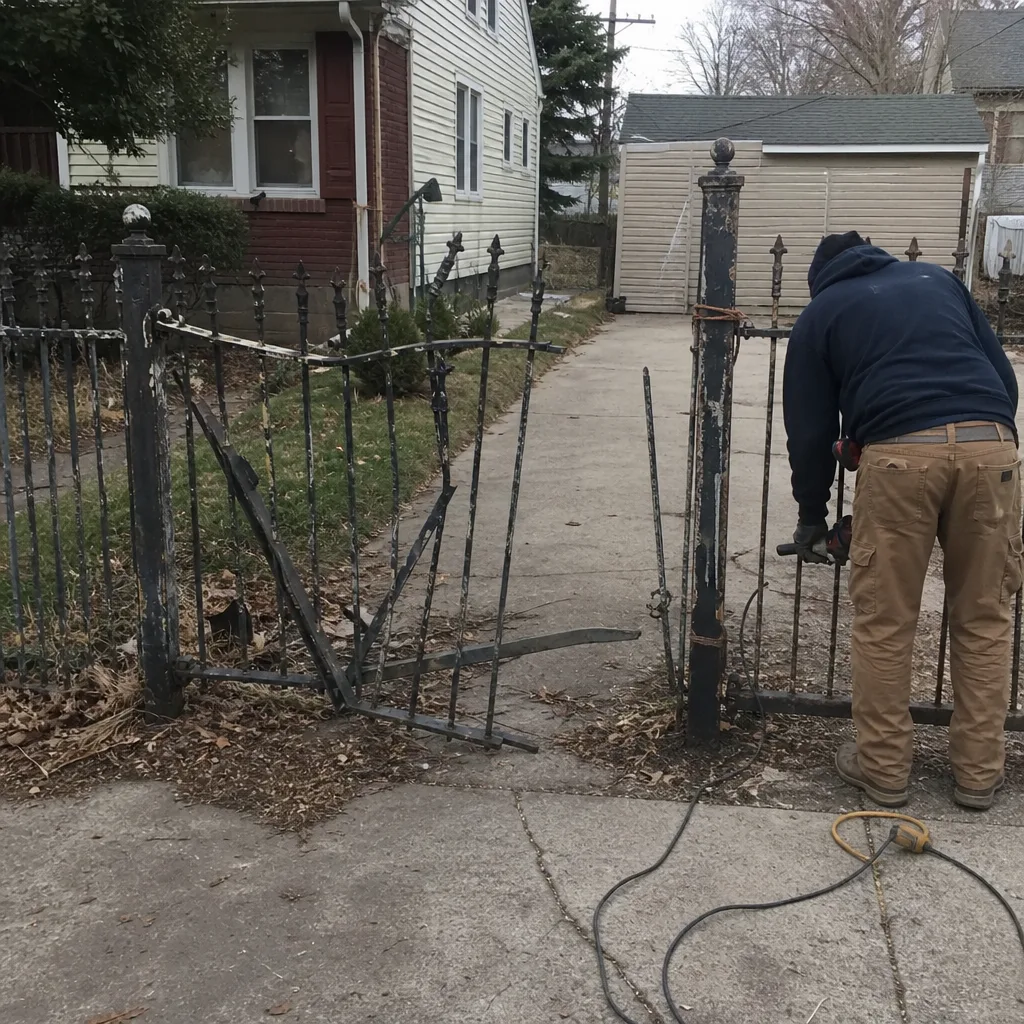 Before
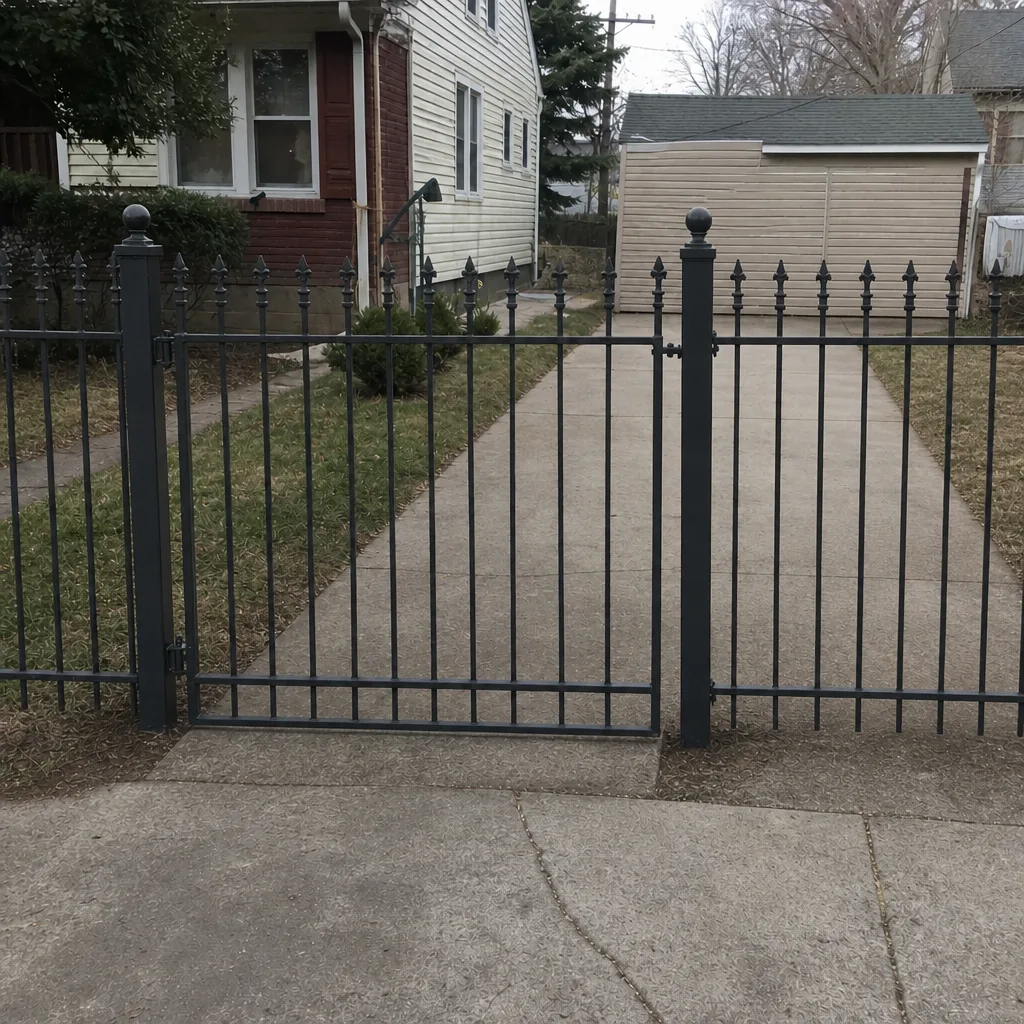 After
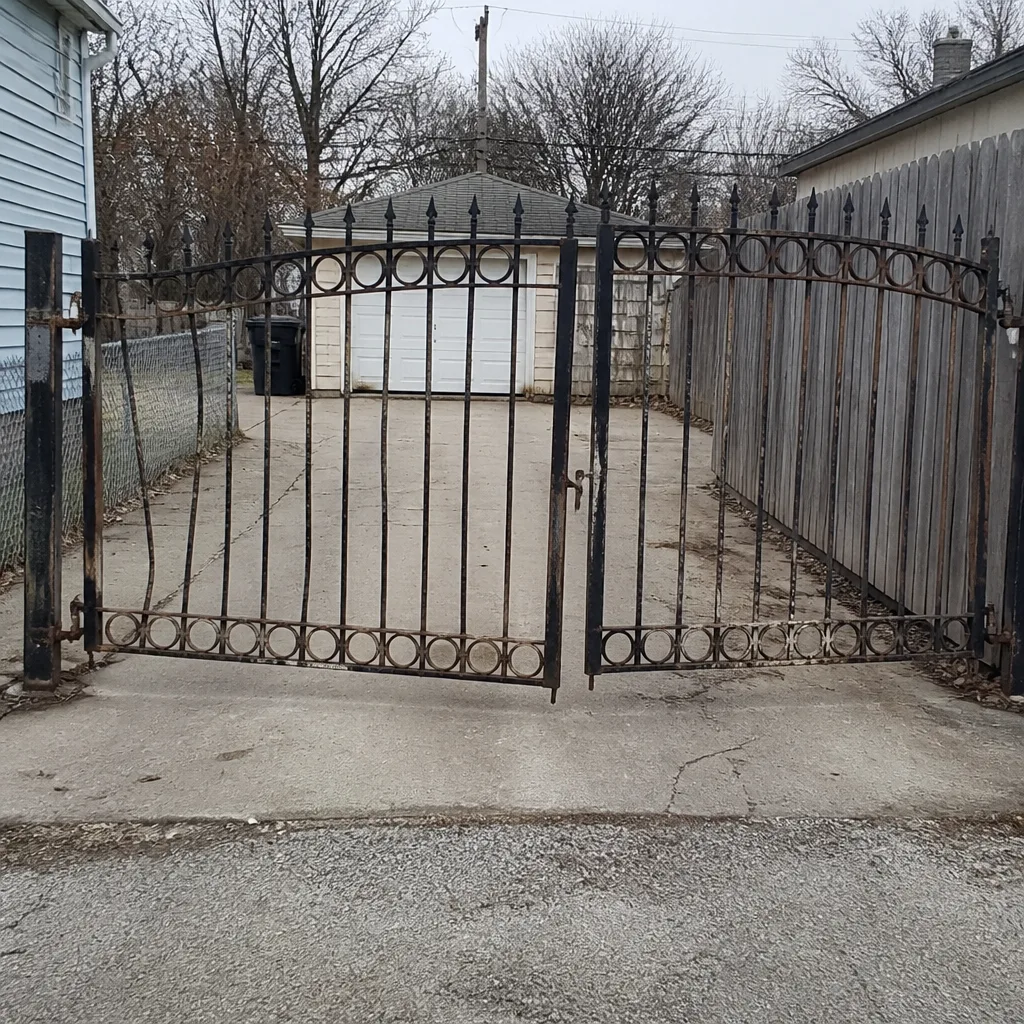 Before
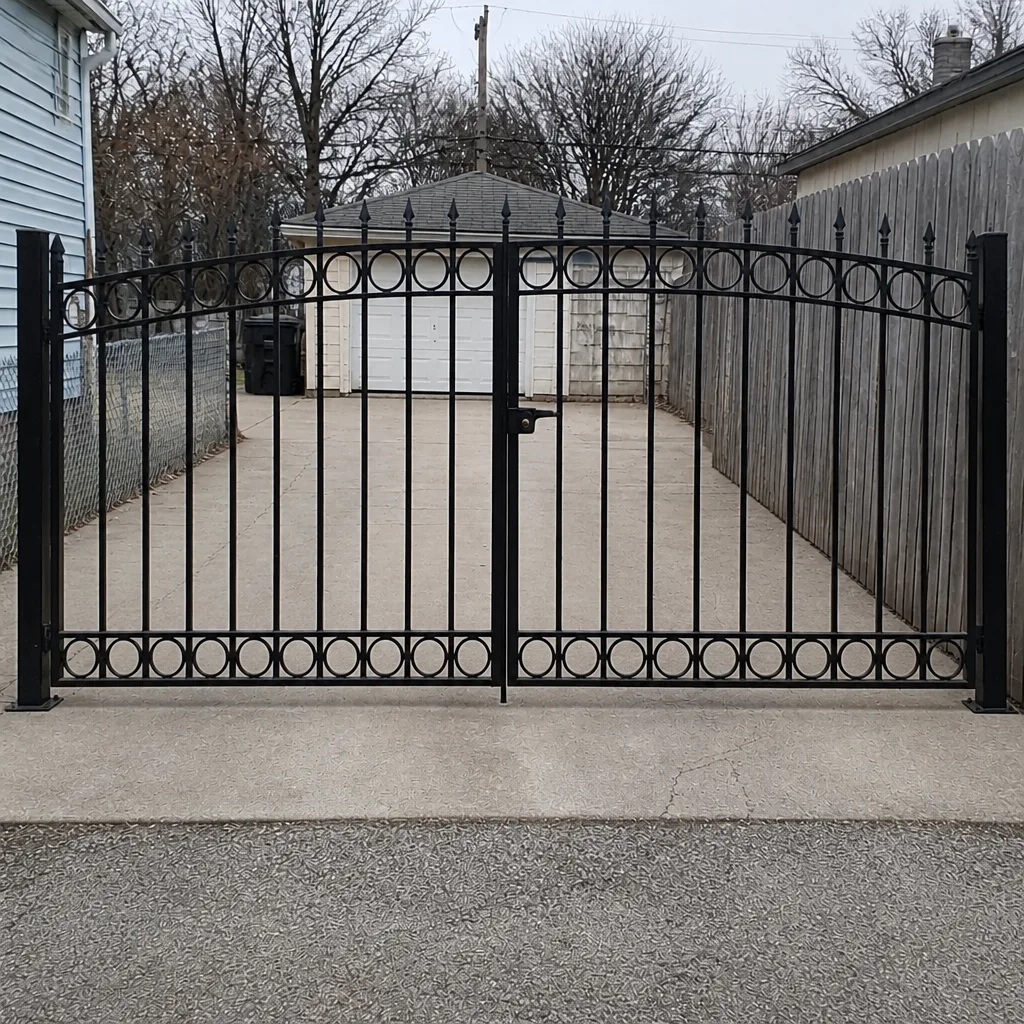 After
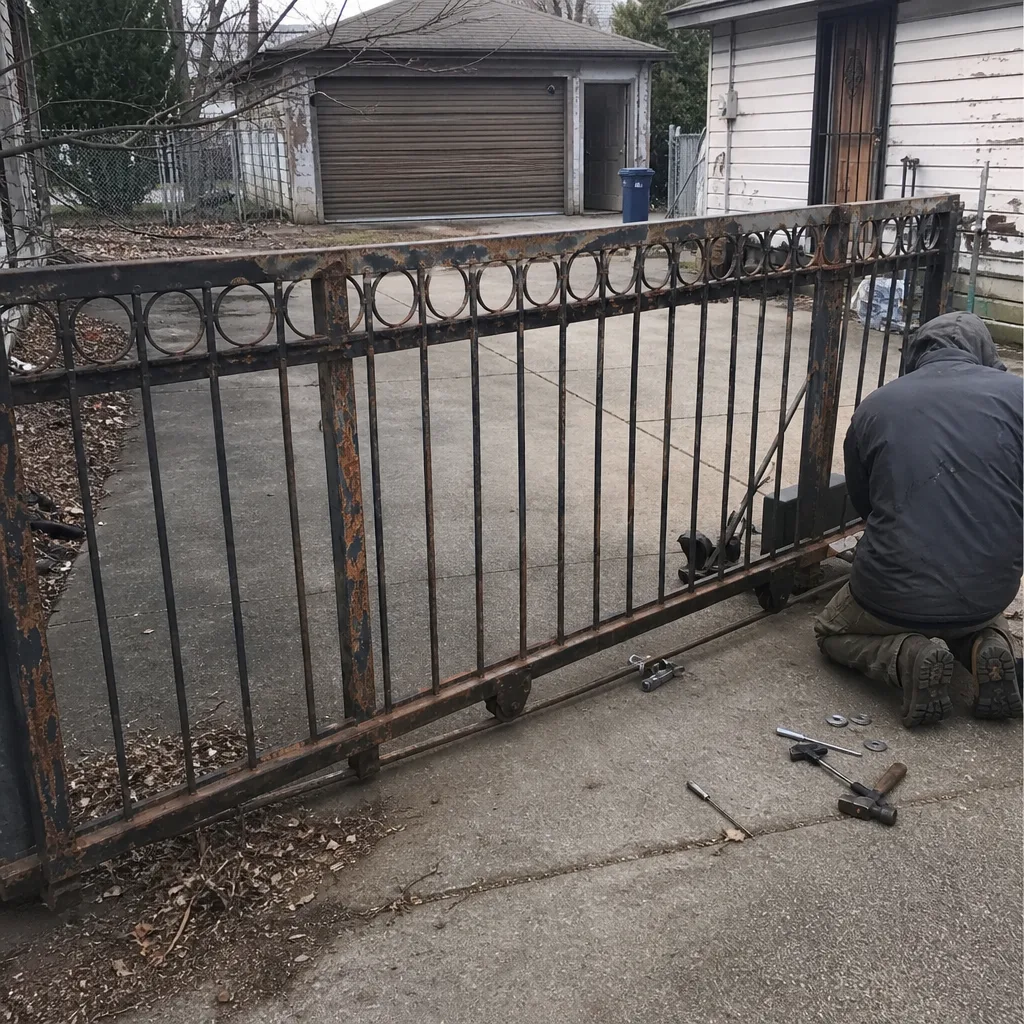 Before
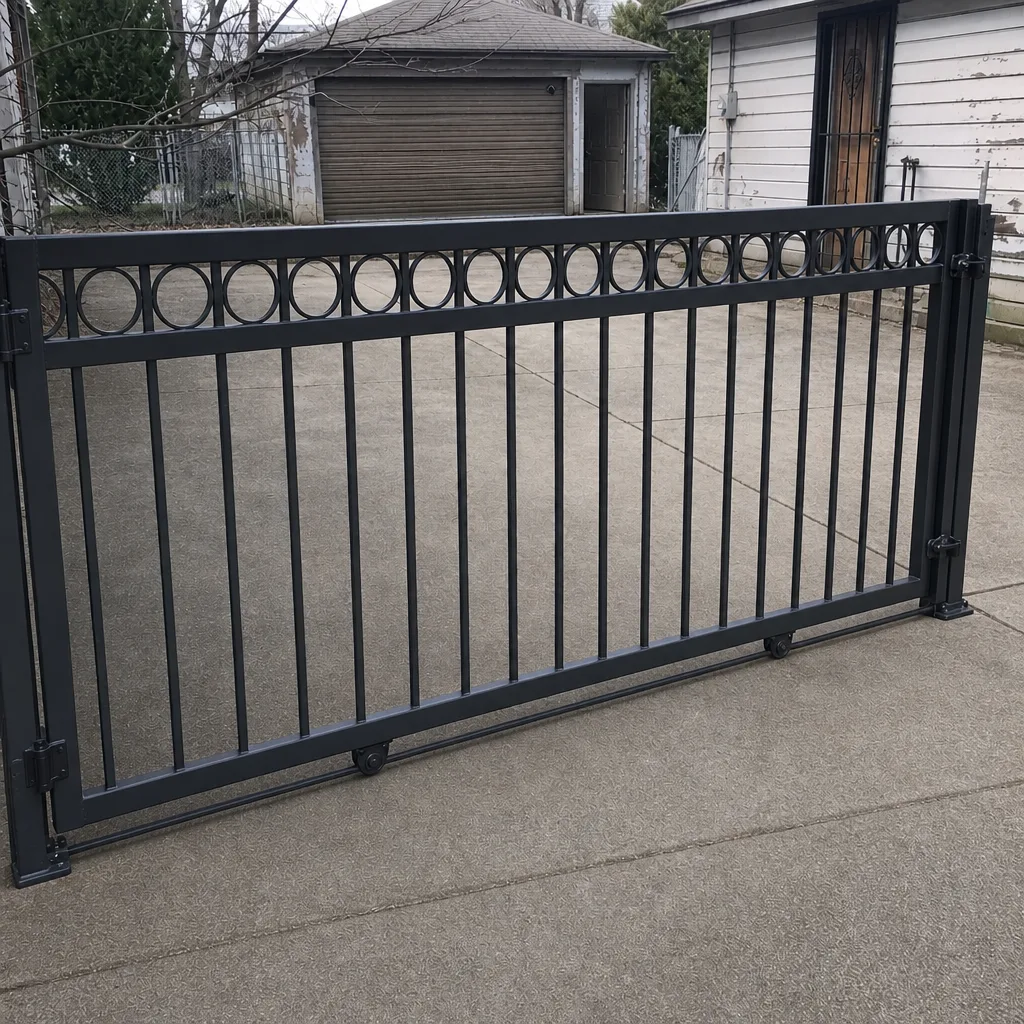 After
Common Mistakes to Avoid
- Skipping the fall prep because the gate “feels fine.” A gate that’s working fine in October is the one most likely to be let go until it breaks in January. The prep exists precisely because the symptoms show up months later.
- Cranking up the limit switches to mask a moving post. Adjusting limits to compensate for footing movement works for a season and then leaves the gate trying to close against the ground. Fix the footing.
- Assuming heat-related faults are operator failures. A control board error that only appears in the afternoon heat deserves a diagnostic, not a replacement operator.
- Lubricating hinges with the first can on the shelf. The wrong lubricant attracts grit and makes wear worse. Gate hardware needs the right product for the right pivot point.
- Using the operator as a lock during a storm. Wind force travels into the operator’s drive. Secure the gate mechanically, and don’t assume the motor is holding it.
- Leaving the gate in full automatic through the coldest weeks when it’s binding. If a gate drags in winter, switching to manual is a reasonable short-term choice, but only if you check it before spring. And no schedule adjustment replaces addressing the underlying bind.
- Assuming a generalist will diagnose a control board. A fence or general contractor can adjust a gate, but an electric gate’s control board, loops and operator logic need someone who works on those systems directly.
When to Call a Professional
Some seasonal care is a homeowner’s job: clearing the travel path, checking the footing for cracks, noting when a fault appears. The point where you should call is when anything points to the operator, the control board, the power wiring or a footing that has moved. Those are the areas where a wrong guess costs more than a service call, and where the safety stakes are real. Live wiring on an electric gate can be lethal, and a heavy gate panel that comes off its track can injure someone badly. Don’t diagnose those parts from a homeowner checklist.
We work with LiftMaster, FAAC, BFT, Linear, Viking, Ghost Controls, DoorKing, Elite and Mighty Mule systems, which covers the vast majority of residential operators in this area. If your gate is struggling, call (855) 360-8227. We answer 24/7. Fast dispatch from 7am to 7pm, Sunday through Friday. Estimates are free, and the price is quoted and agreed before any work starts. You’ll get a diagnostic, a written estimate and a clear answer on whether the problem is the operator or the hardware.
Frequently Asked Questions
An automated gate in Joliet should get a fall prep visit before the first hard freeze and a spring inspection before it returns to full automatic operation. Those two visits cover the seasons that stress gate hardware most, and they catch footing movement and limit drift before they become failures. A mid-summer check is worthwhile if the operator throws intermittent faults in the heat. Call (855) 360-8227 for a free estimate.
Summer heat expands the gate frame and changes how the operator behaves at the end of travel, and a limit setting that worked in cooler weather may cut the gate short in the afternoon heat. That’s usually a travel and limit adjustment, not a failing motor. It’s worth a diagnostic to rule out a control board fault. Call (855) 360-8227 for an exact quote, estimates are free.
Yes. Repeated freeze-thaw cycles in Will County’s clay soil lift and settle a post footing, and the cumulative movement over a winter is enough to misalign limit switches and make a gate drag. The visible sign is a crack ring around the post base or a gate that no longer hangs level. A moving post needs footing correction, not operator adjustment. Call (855) 360-8227 to schedule a look.
Only if you know the release procedure for your specific operator, and on some systems doing it wrong under spring load is dangerous. The safer approach is to secure the gate mechanically against its stop or post in a fully closed or fully open position. If you’re unsure how your operator’s manual release works, don’t force it; call a specialist. Call (855) 360-8227 for advice.
A spring inspection covers seven checks: a manual walk-through of the full travel, footing inspection, hinge and arm pivot play, safety reverse test, photo-eye test, battery backup test, and several full operator cycles to catch new noise or hesitation. It happens before the gate is returned to automatic operation. Call (855) 360-8227 to book one; estimates are free.
Only if the gate is binding or the operator is throwing faults; a healthy automated gate can run through winter. The problem is switching to manual and forgetting to check it before spring. If winter makes your gate drag, run the seven spring checks before going automatic again. Call (855) 360-8227 if anything looks off.
The Bottom Line
Seasonal gate care in Joliet comes down to a calendar: prep in fall, inspect in spring, watch the operator in summer, and secure the gate through storm season. The footing is the part that most often gets misdiagnosed, and it’s the part worth checking first. Four seasons of stress on a gate is normal in this climate; a gate that fails every year is usually a gate whose seasonal checks were skipped. With two visits a year and some attention to what the gate is telling you, an automated gate should serve for years. Gates fail in the season after the warning, not the season of the warning; act on the warning.
If you want a specialist on it rather than a generalist, call Gate Repair Joliet at (855) 360-8227. We answer 24/7. Fast dispatch from 7am to 7pm, Sunday through Friday. Free estimates, upfront pricing, and a written estimate before any work starts. Our technicians have up to 13 years of experience with gate systems, and we work on the operators you actually own.
Written by the team at Gate Repair Joliet.