
Last updated November 16, 2026
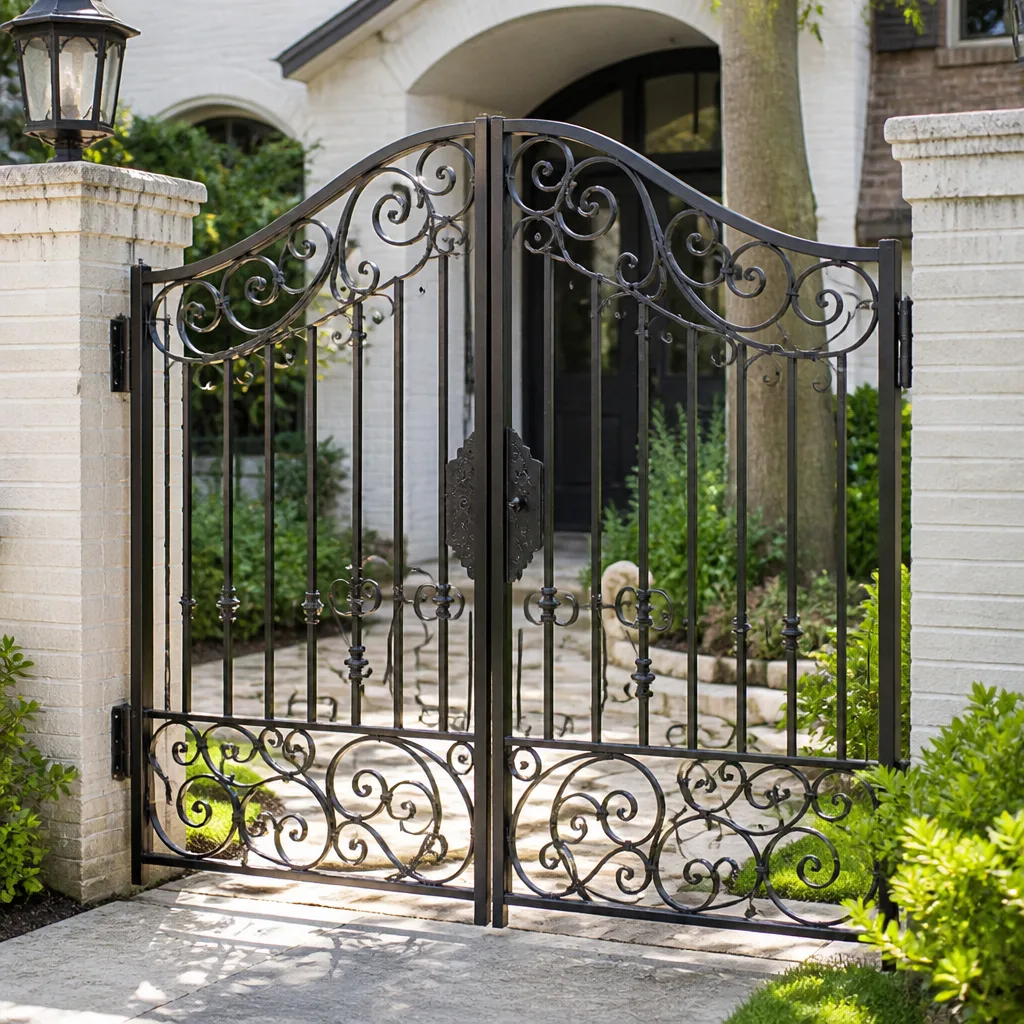 Wrought iron
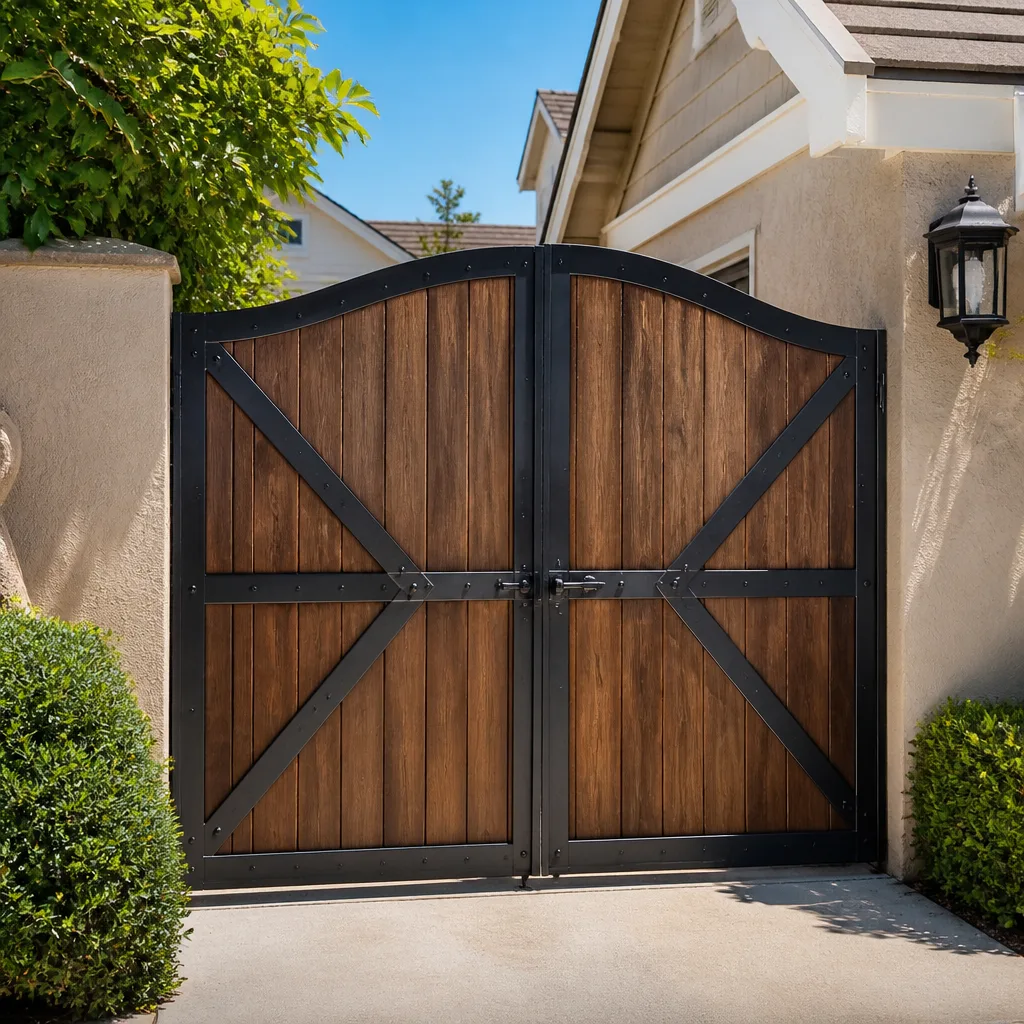 Wood & steel frame
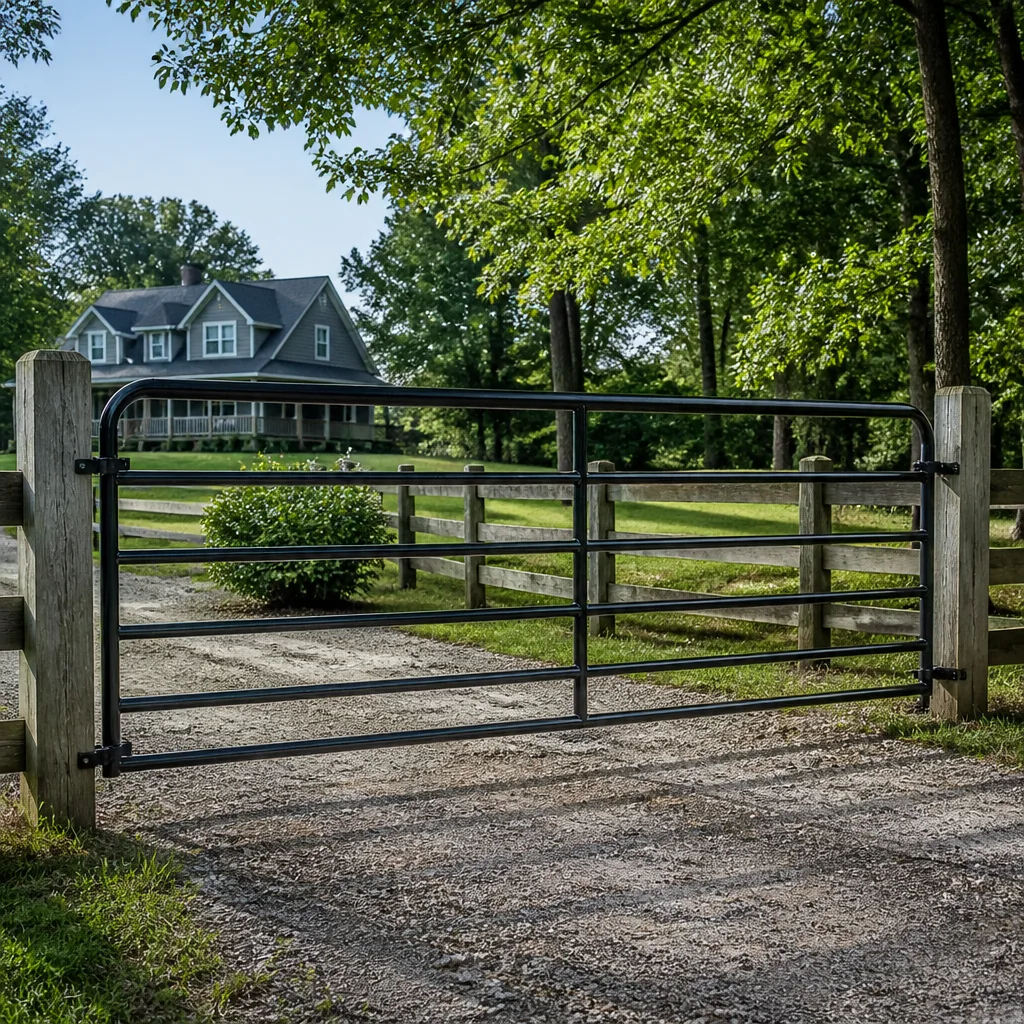 Farm & ranch
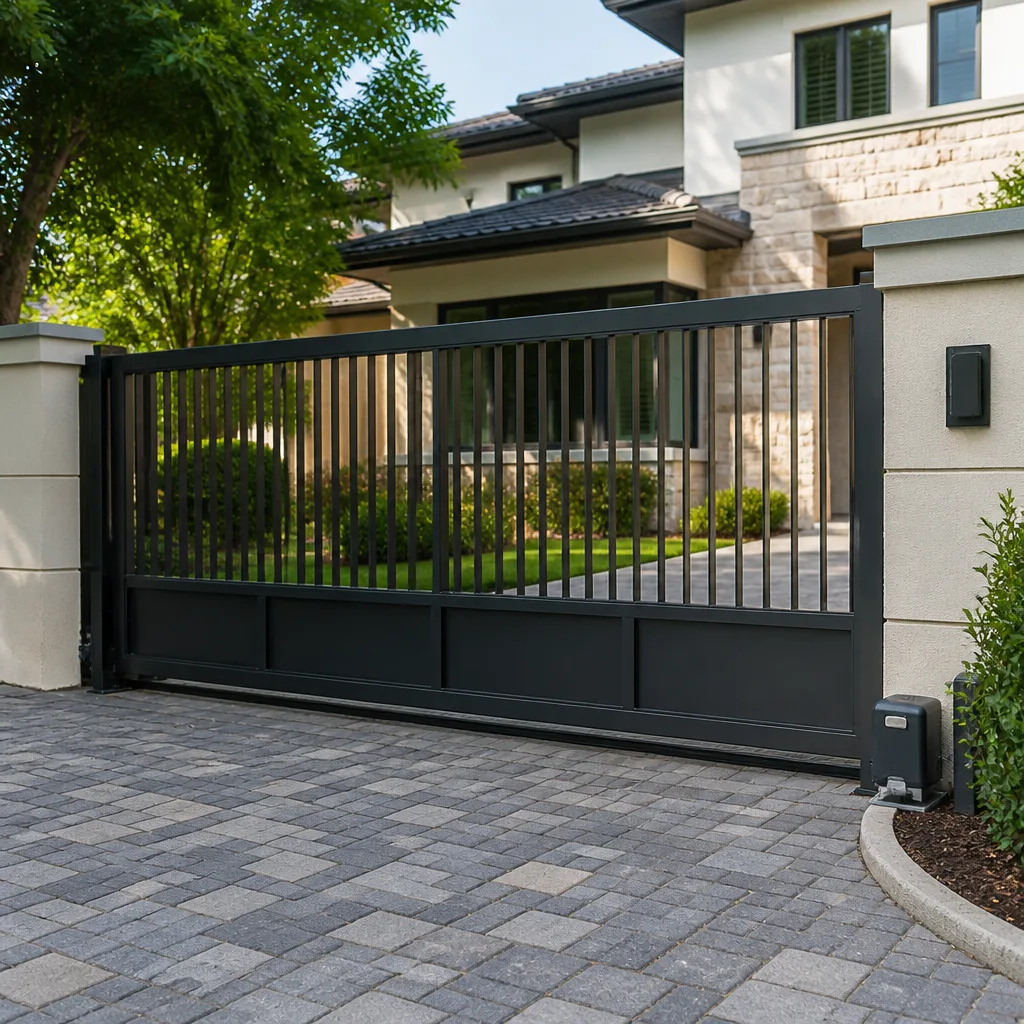 Sliding driveway gates
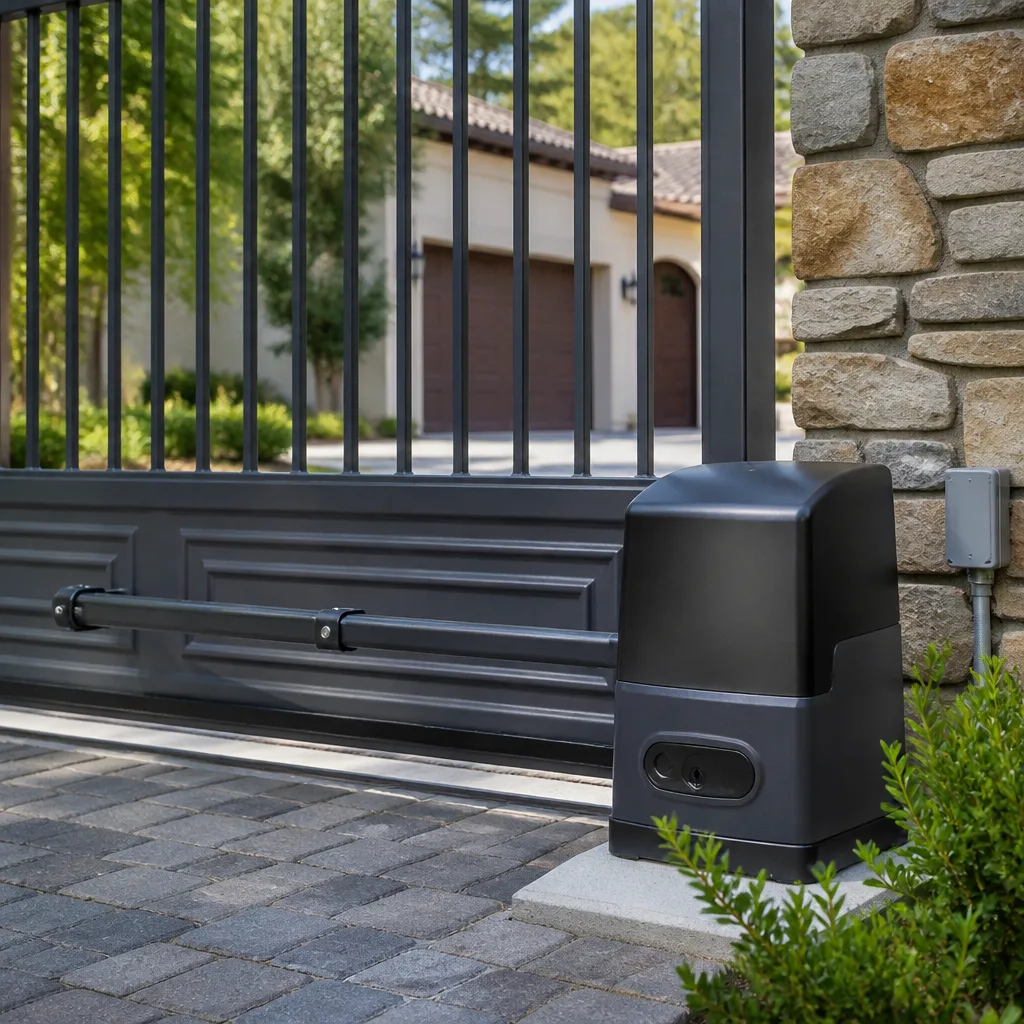 LiftMaster operators
Free on-site gate assessment - hinges, posts, and your LiftMaster or Nice gate operator checked before anything is quoted
The assessment is free and the quote is the invoice.
Get your free estimateDIY vs Professional Gate Repair: The Joliet Homeowner’s Decision Guide
Most gate repair advice treats the DIY question as a measure of your confidence. If you’re handy enough, tackle it; if not, call someone. That framing gets people hurt and gets operators wrecked. The real question is which failure you’re looking at. Replacing a remote battery is a two-minute errand. Adjusting a swing gate’s limit switches is a professional-only job, and not because it’s technically difficult – it’s because a miscalibrated limit switch on a heavy automated gate can cause entrapment that results in serious injury. In this guide we’ll sort gate problems into three honest buckets – safe to handle, don’t touch, and call either way – so a Joliet homeowner can stop guessing and start deciding.
Quick Answer
Some gate repairs are genuinely safe for a homeowner: remote battery swaps, light lubrication of hinges and rollers, sensor cleaning, and visual inspections. Everything involving the operator’s internals, the electrical supply, the gate’s structural alignment, or its limit and safety adjustments belongs to a trained technician. The deciding factor isn’t how mechanically inclined you are – it’s whether the repair can leave the gate in a state that crushes, traps, or shocks someone, and whether touching it can void the operator’s manufacturer warranty.
Styles & brands we work with
- Wrought iron
- Wood & steel frame
- Farm & ranch
- Sliding driveway gates
- LiftMaster operators
Table of Contents
- The Decision Tree: Which Bucket Is Your Gate Problem In?
- Repairs That Are Genuinely DIY-Appropriate
- Repairs That Are Professional-Only, and Why
- Illinois Liability and Unpermitted Electrical Work
- The Tools That Make Amateur Gate Work Dangerous
- How DIY Attempts Void Operator Warranties
- What Makes Gate Repair Different in Joliet
- How to Choose a Gate Specialist in Joliet
The Decision Tree: Which Bucket Is Your Gate Problem In?
Before you pick up a wrench, work the problem through three questions in order. The answer to each one either keeps you in the safe zone or pushes you toward a professional. This is the same triage we run mentally on every gate repair call that comes in from Joliet.
- Does the problem involve electricity, the operator’s internals, or its safety devices? If yes, it’s professional territory. That includes control boards, loop detectors, photo eyes, limit switches, motor assemblies, wiring, and the power run to the operator. No exceptions.
- Does the problem involve the gate’s weight, alignment, or moving structure? Sagging hinges, a gate that drags on the ground, a slide gate that has jumped its track, or a post that has shifted – all professional. A heavy gate panel that comes loose is a crushing hazard.
- Is it cosmetic, consumable, or external? Remote batteries and programming, lubrication of moving metal parts, cleaning debris off sensors, and a visual walk-around. These are the things you can do yourself without putting anyone at risk.
If a problem lands in more than one bucket – say an automated swing gate that drags and also won’t close on command – treat it as professional. The structural issue and the operator issue are usually related, and fixing one without understanding the other is how a small repair becomes a large one. The same logic applies whether the gate is a manual driveway swing gate or a full electric slide gate serving a commercial lot.
Repairs That Are Genuinely DIY-Appropriate
We’re not going to pretend every gate issue needs a truck in the driveway. There’s a real list of tasks a homeowner can handle safely, and handling them keeps small problems from snowballing into repairs. Here’s what belongs to you.
- Remote battery replacement. If the remote only works up close, or not at all, the battery is the first suspect. Pop the cover, swap the battery, test it. That’s it.
- Remote programming. Adding a second remote or re-pairing an existing one is a menu exercise on most operators, including LiftMaster and Linear units. The instructions are in the manual, and the process doesn’t involve anything that moves.
- Lubrication of hinges and rollers. A manual swing gate with dry hinges will eventually sag. A light application of the lubricant your gate’s manufacturer recommends on the hinge pins and roller assemblies keeps them moving. Don’t spray the operator’s internal parts.
- Sensor and photo-eye cleaning. When it rains, a film of dirt or a spider’s worth of debris on a photo eye can stop a gate from closing. A soft cloth and a check for obstructions in the beam path is safe.
- Debris clearing. Leaves, branches, and gravel in a slide gate’s track cause drag and false stops. Clearing the track is maintenance, not repair.
- Visual inspection. Walk the gate line every few months. Look for rust, loose bolts, cracked welds, and anything that looks out of square. Spotting problems early is the single best thing a homeowner can do.
One rule overrides all of these: if a DIY task turns into something that requires opening an operator housing or loosening structural hardware, stop. The task just changed categories. One of the more common calls we take in Joliet is a homeowner who started with remote programming and discovered the operator’s control board wasn’t responding – which is exactly the point where it stops being a homeowner job. That’s the same conversation we have on our electric gate repair line every week.
Repairs That Are Professional-Only, and Why
Here’s the list that matters most. Every item below carries real injury risk, real liability, or real warranty exposure. If your gate has any of these symptoms, put the tools down.
- Limit switch adjustment. A limit switch tells the operator where to stop the gate. If it’s miscalibrated, the gate can drive past its stopping point, crush a person against a wall or post, or fail to reverse. On a heavy automated gate this is the single most dangerous adjustment there is.
- Safety device repair or alignment. Photo eyes, safety edges, and loop detectors are the systems that stop a gate from closing on a car or a child. A misaligned or bypassed safety device makes the whole system unsafe.
- Control board and motor work. Control boards, capacitors, and motor assemblies live inside the operator housing and connect to line voltage. This is electrical work, and it’s the kind of work that shocks.
- The power run to the operator. Any wiring between the electrical source and the gate operator is a licensed electrical job. This is where a lot of homeowners get into trouble without realizing it.
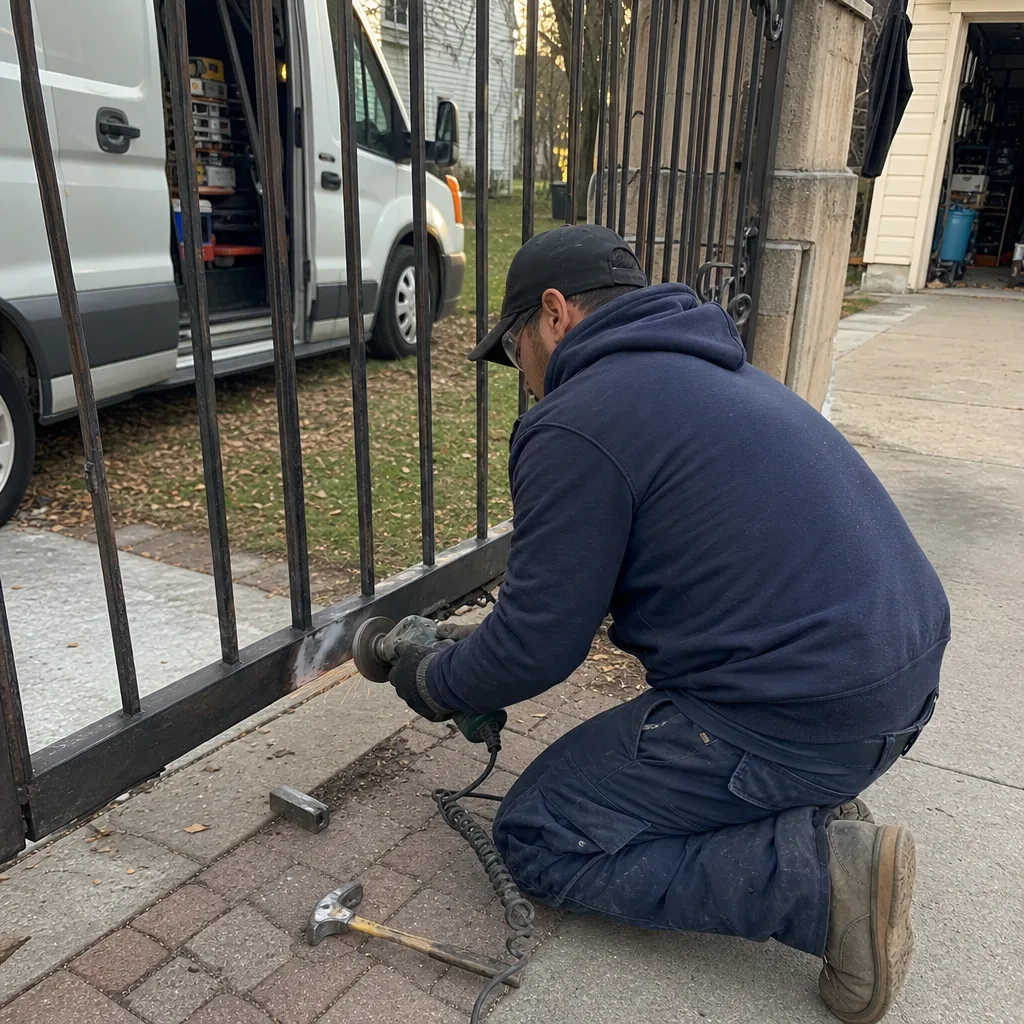
- Structural repairs. Sagging gates, bent tracks, leaning posts, and cracked welds. These involve the gate’s weight and geometry, which means they involve crushing hazards if the gate drops.
- Slide gate derailment. A slide gate that has come off its track can weigh several hundred pounds. Getting it back on is not a furniture-moving exercise.
Our technicians work directly with control boards, loop detectors, and motor assemblies every day, on operators from FAAC, LiftMaster, and BFT among others. The reason isn’t that we’re braver than a homeowner. It’s that we’ve calibrated enough gates to know how the safety systems behave when they’re adjusted wrong, and we have the tools and the insurance to be on the wrong end of a failure if it happens. If you’re weighing a Joliet gate repair on anything from the list above, our gate repair in Joliet team is the safer call.
Illinois Liability and Unpermitted Electrical Work
This is the part most DIY guides skip, and it’s the one that can cost a homeowner more than any repair. When you perform electrical work on a gate operator without a permit and without a licensed electrician, you’ve taken on the liability for that work. If someone is later injured by the gate, that exposure lands on you, not on the equipment, not on the installer, not on the brand of operator.
The electrical side is where this gets serious. The power run to an operator is a permanent electrical installation. In most Illinois municipalities – and this varies by city – a permit is required for that kind of work, and the work needs to be done by a licensed electrician who can be inspected. City of Joliet building rules are the authority here, not us, so the honest answer is to call the city’s building department and ask before any electrical work begins.
The liability question goes a step further than the permit. If a gate or gate operator injures a guest, a delivery driver, or a child on your property, and the injury traces back to work you performed yourself, your homeowner’s insurance may not cover the claim – insurers look at whether the work was permitted and whether it was done by a licensed party. That’s a separate legal exposure from any code violation, and it doesn’t go away because the repair “looked fine.” For anything that touches the electrical supply or the operator’s safety chain, the professional is the cheaper option. Licensed and insured technicians carry their own liability for the work they perform.
The Tools That Make Amateur Gate Work Dangerous
Homeowners often assume the barrier to professional gate work is that pros own better tools. In truth, most of the tools involved are things you can buy. The danger isn’t the tool – it’s the knowledge the tool is used to apply. Here’s a partial list of what a professional gate repair involves and why owning the equipment doesn’t substitute for knowing how to use it.
- A multimeter. Used to check voltage at the operator, test control board outputs, and confirm safety device continuity. Anyone can buy one. Knowing what the readings mean – and what a normal reading looks like on a given operator – is the skill.
- A torque wrench. Structural hardware on a gate has a torque spec, and over-tightening a bolt on a heavy hinge is how you crack a weld. The tool costs a fraction of the expertise.
- A gate calibration tool or the operator’s calibration routine. Modern operators from LiftMaster and BFT have specific procedures for setting open and close limits so the gate’s safety systems respond correctly. This is where miscalibration causes injury.
- A safety harness or lifting equipment. Slide gates and heavy swing gates aren’t one-person lifts. A gate that falls on a foot or a hand causes real damage.
- Electrical test equipment for the power run. Verifying that power to the operator is correct is a licensed electrician’s job, and it’s the first step in any safe repair.
The pattern to notice is that every dangerous tool is paired with a calibration or safety judgment. Owning the multimeter doesn’t tell you whether the control board is failing or the safety edge is misreporting. That read comes from working on gates every day, across a range of operators, until the failure patterns become familiar.
How DIY Attempts Void Operator Warranties
Gate operators are not cheap equipment. A replacement operator typically runs somewhere in the $600 to $2,000 range depending on the class, the brand, and the gate it’s driving. That’s a number worth protecting, and it’s one a homeowner can quietly forfeit with a single wrong move.
Most manufacturer warranties cover defects in materials and workmanship but exclude damage caused by improper installation, unauthorized repair, or modification. The moment an unqualified person opens the operator housing, adjusts internals, or wires into the control board, the manufacturer has grounds to deny a warranty claim. The failure might be a genuine defect – a bad control board from the factory, for example – but if the housing has been opened and the wiring altered, the claim gets denied regardless.
This matters most with the well-known operators. A LiftMaster or Linear unit under warranty is a valuable piece of equipment, and preserving that warranty means preserving the record of who worked on it. A technician from a gate-only operation leaves a paper trail the manufacturer respects. A homeowner with a screwdriver doesn’t. Multi-brand familiarity is exactly what lets a specialist repair or update existing equipment rather than defaulting to a replacement – we work with nine major operator brands, including LiftMaster, FAAC, BFT, Linear, Viking, Ghost Controls, DoorKing, Elite, and Mighty Mule. Diagnosing and repairing an existing operator is almost always cheaper than replacing it, and it’s only possible when the equipment hasn’t been compromised first.
What Makes Gate Repair Different in Joliet
Joliet has a specific combination of housing stock and property types that shapes what goes wrong with gates here. Driveway gates on the older residential streets near the downtown core often sit on masonry or concrete posts that have shifted with decades of freeze-thaw cycles. The gate hardware is original or close to it, and the hinge sag that comes from that movement is one of the most common repair calls we get.
Newer residential developments and commercial lots tend to have automated systems – metal or composite slide gates, swing gates on heavy-duty operators, and access control systems for gated communities and commercial properties. The automation is where the diagnostic skill matters most, because the symptoms can look identical whether the problem is a wiring fault, a failing control board, a misaligned photo eye, or a limit switch out of adjustment. Landlords and property managers in Joliet deal with these systems differently than a single-family homeowner does – a gate that fails on a commercial lot blocks tenants and deliveries, and the repair needs to be diagnosed accurately the first time because there’s no room for a wrong guess.
The climate plays a role too. Joliet’s freeze-thaw cycles work on gate hardware the same way they work on pavement – expanding and contracting through every seasonal swing. Metal gates develop rust at weld points, hinges stiffen, and operators work harder in cold weather. A gate that’s fine in July can start dragging in January, and that drag translates into strain on the operator’s motor. Regular visual inspection and lubrication through the fall is the single best preventive step, and it’s something a homeowner can do. Joliet homeowners who live in the older neighborhoods around the downtown should pay particular attention to post movement and hinge hardware. The Joliet page covers more of what we see on local properties.
How to Choose a Gate Specialist in Joliet
The last decision in the DIY-vs-professional guide is which professional to call. Not all gate repair is done by gate specialists. Many fence companies, general contractors, and garage door shops handle gates as a side service, and the difference shows up in diagnosis quality and in how the repair gets priced.
- Ask whether gates are the primary service or a side service. A gate-only specialist works on gates every day. The diagnostic patterns are familiar because they’ve been seen before, not because the technician read the manual on the way over.
- Ask which operator brands they work on. The answer should be specific. A technician who names LiftMaster, FAAC, and BFT without hesitation is speaking from experience. A technician who says “we work on all of them” isn’t telling you anything.
- Ask whether they handle both electric and mechanical gates. Some shops only do one. The best answer is a specialist who handles automation and the mechanical side under one roof, so you’re not juggling two contractors for one gate.
- Ask whether they do installation as well as repair. A company that installs gates is also the company that can advise on the right operator when yours fails – and can keep the gate running through its whole life instead of handing you off at each stage.
- Confirm insurance before any work begins. Licensed and insured is the baseline. Ask specifically about liability coverage for the gate work.
The right gate specialist should also confirm what’s wrong and agree on a price with you before any work starts. A written estimate that names the diagnosis and the fix is not a formality – it’s what prevents an invoice that lands higher than the repair quote. On a gate repair, the diagnosis is the hard part; the estimate should reflect that a technician already knows what’s wrong before you’ve committed to anything.
Common Mistakes to Avoid
- Opening the operator housing to “see what’s wrong.” The interior of an operator is where the line voltage lives and where the warranty goes out the window. If you open it, you’ve already changed the job from a repair to a replacement.
- Bypassing a safety edge or photo eye because the gate “keeps stopping.” A gate that stops on its own is reporting a fault. Bypassing the safety device doesn’t fix the fault – it removes the thing that would stop the gate from crushing someone.
- Adjusting limit switches by ear. On automated gates this is the most common DIY mistake we hear about, and it’s the one that can end in a serious injury. The calibration has to match the gate’s weight and travel.
- Spraying lubricant into the operator. Lubricating hinges and rollers is safe; spraying anything inside the operator housing is not. The manufacturer will tell you what’s approved and where it goes.
- Assuming a “contractor” who isn’t a gate specialist will diagnose the problem correctly. A generalist can tighten a bolt, but the diagnosis on a commercial or residential automated gate is often a wiring or control board issue that needs a specialist to read correctly. The wrong diagnosis leads to unnecessary replacement.
- Ignoring permit requirements for the power run. Any electrical work to the gate operator should be permitted and done by a licensed electrician. Check with the City of Joliet building department before any electrical work begins.
- Waiting until the gate fails completely. A gate that drags in summer will strain the operator through winter. Small repairs caught early stay small.
See the difference
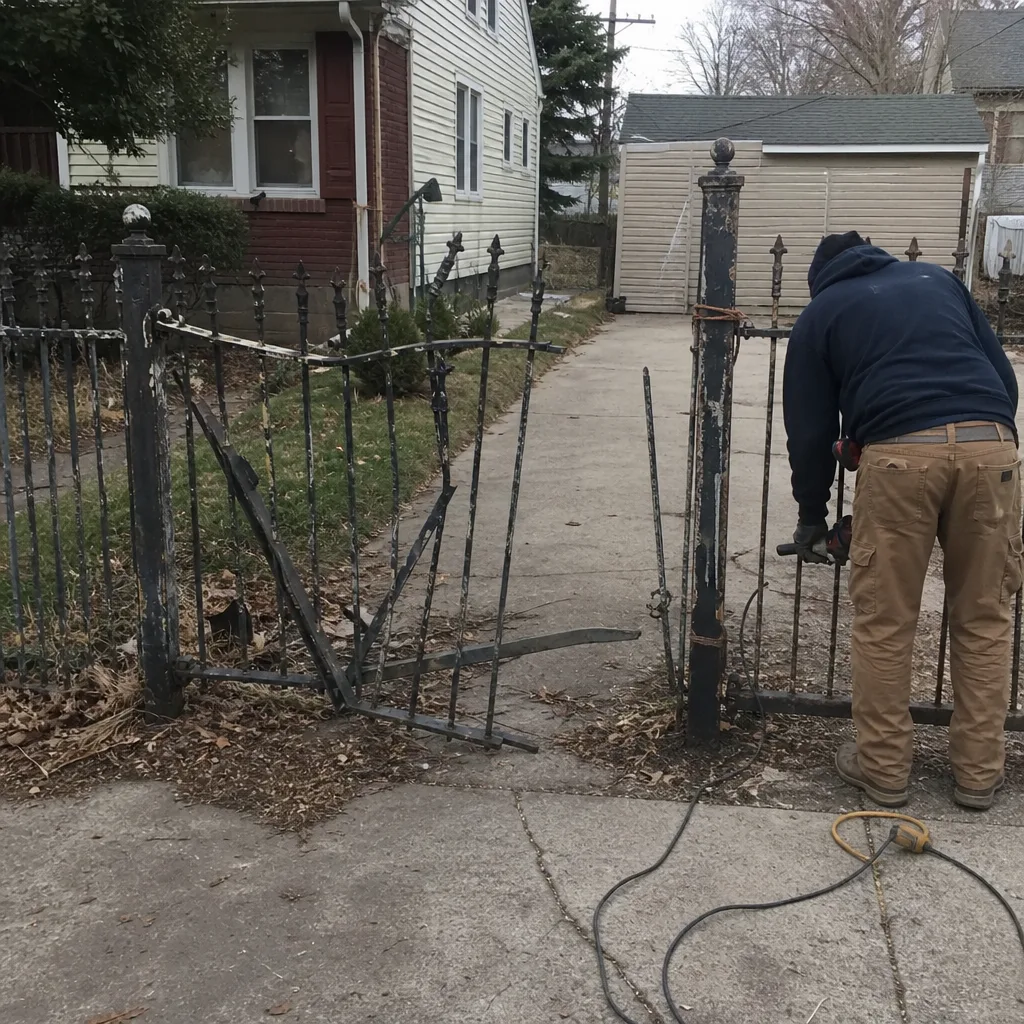 Before
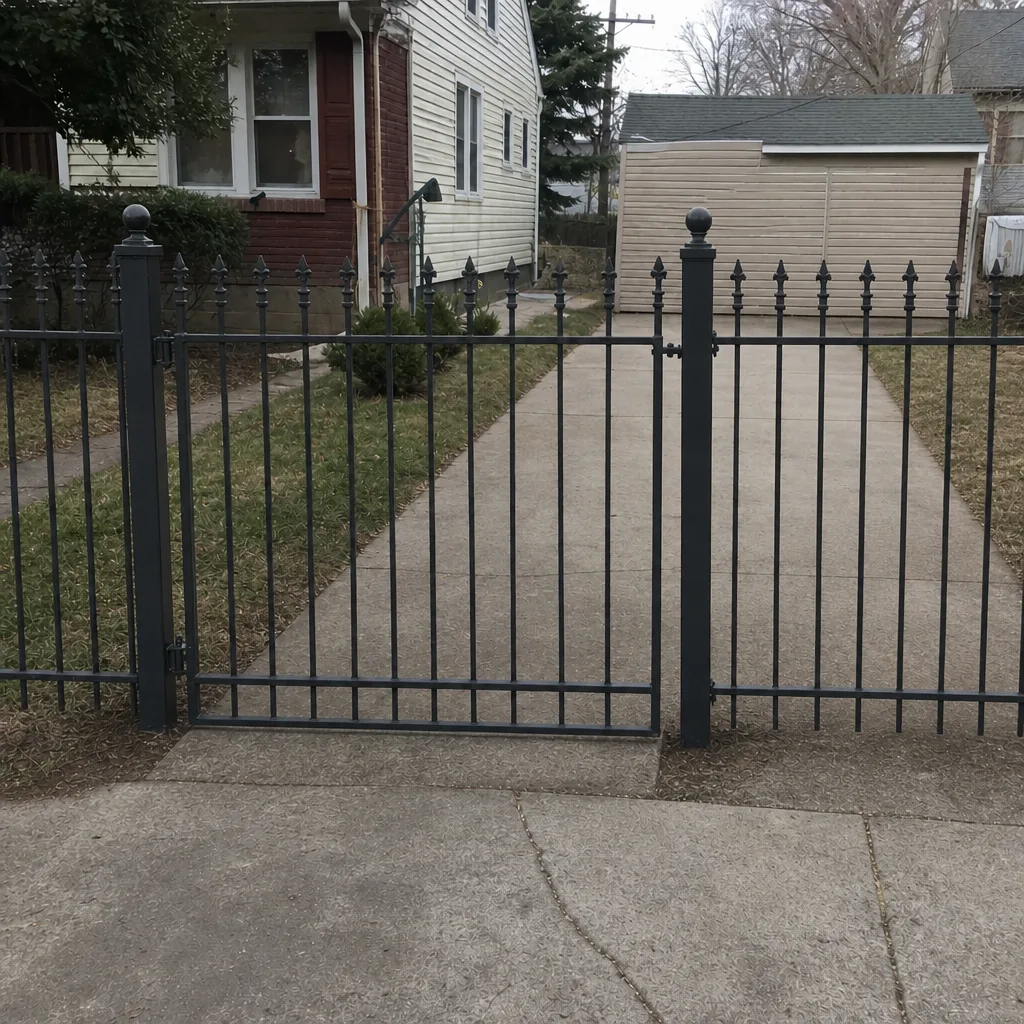 After
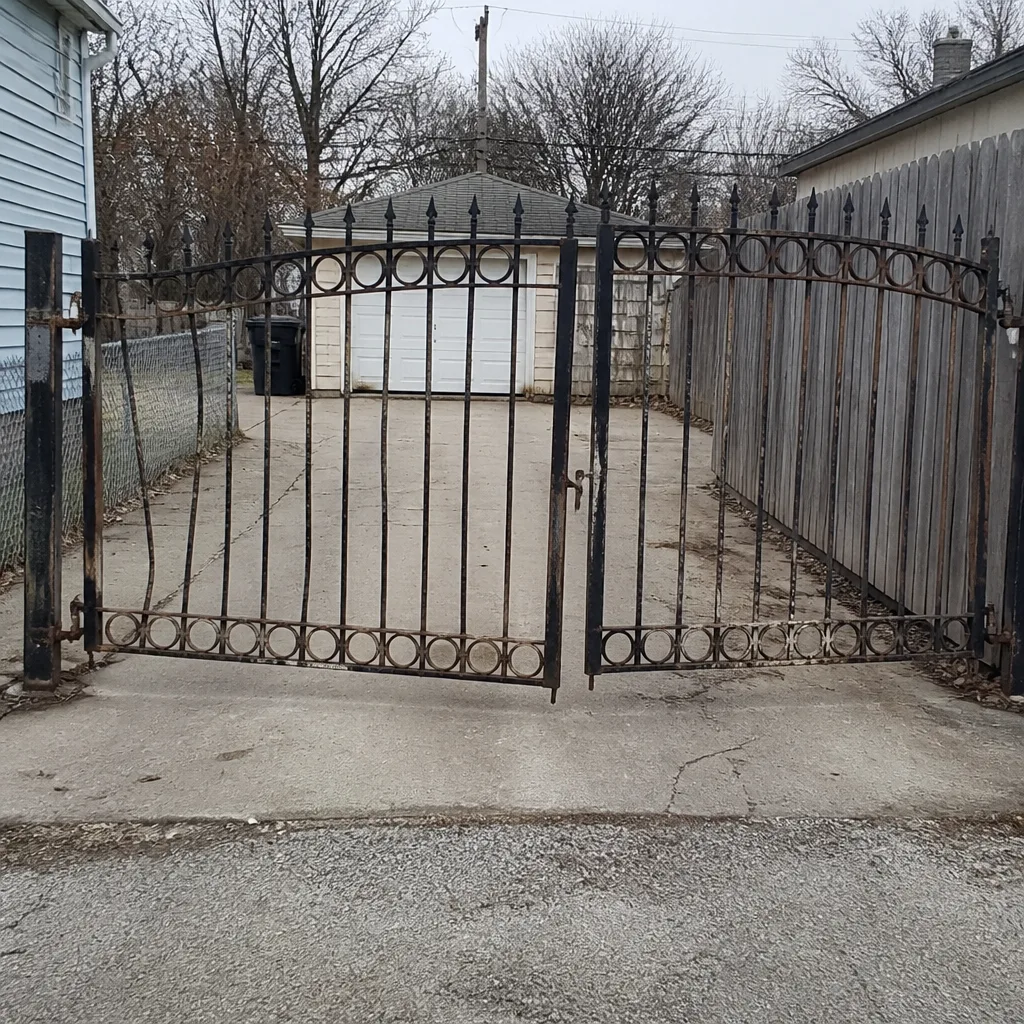 Before
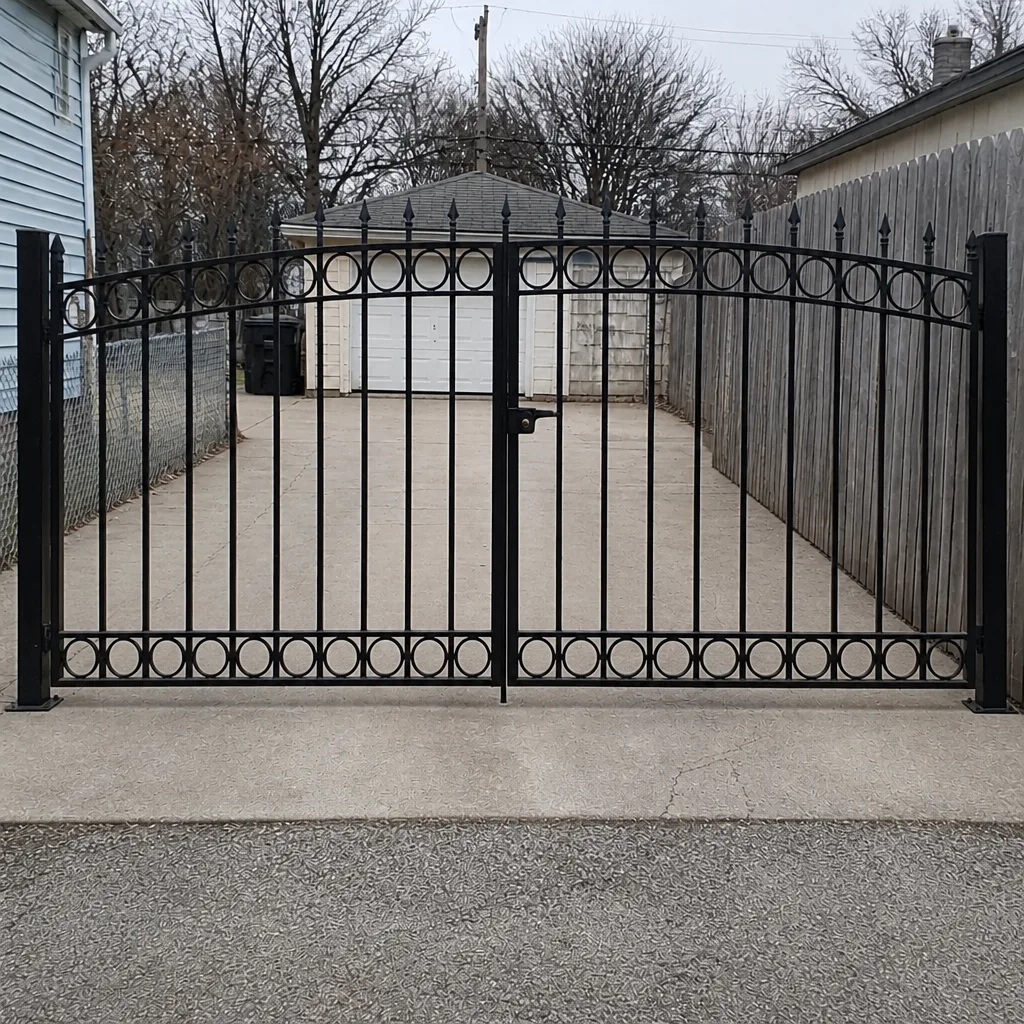 After
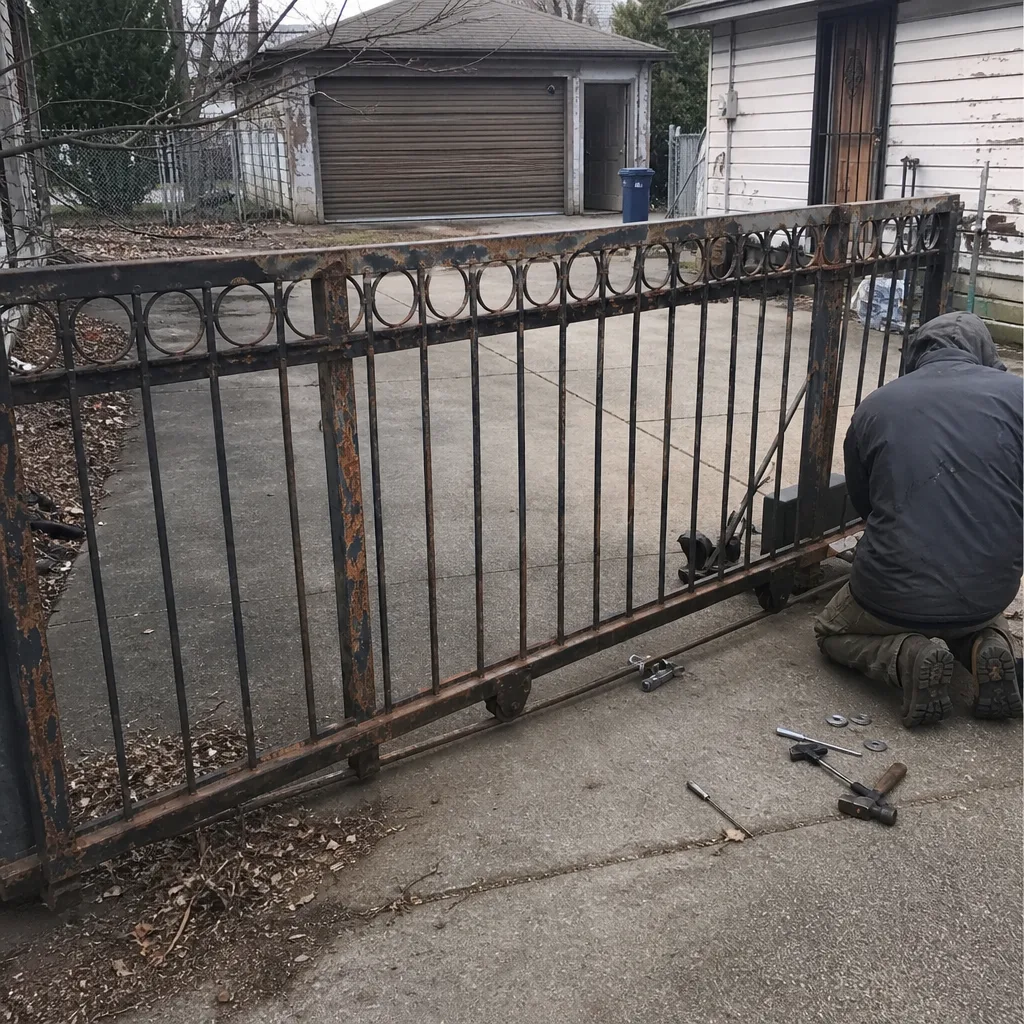 Before
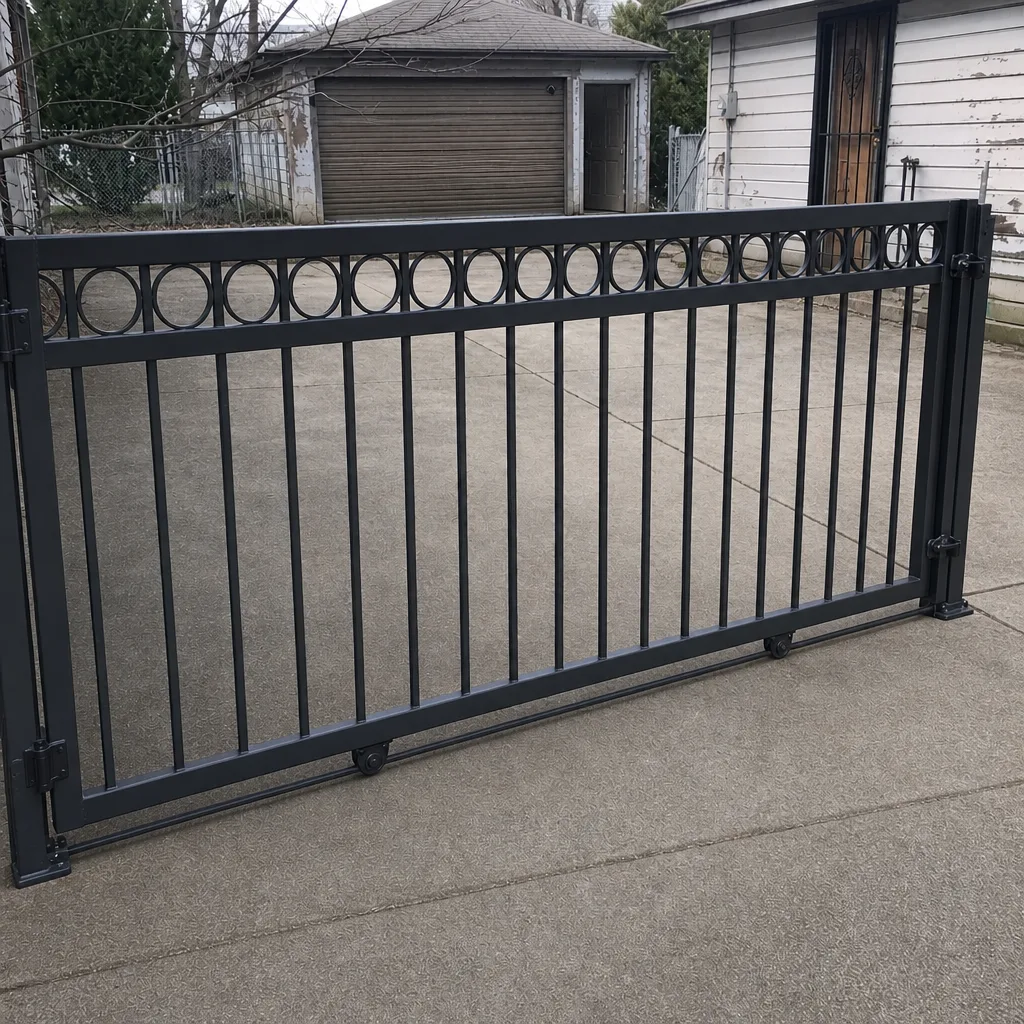 After
When to Call a Professional
Call a professional when the problem involves electricity, the operator’s internals, the safety devices, or the gate’s weight and structure. Call sooner if the gate has stopped reversing, if a safety edge is damaged, if the operator housing has been opened (including by you), or if the gate has come off its track. On a commercial or multi-tenant property in Joliet, call early – a gate that fails blocks tenants and makes the property look unmonitored.
Call (855) 360-8227 for a free estimate. We answer 24/7, with fast dispatch from 7am to 7pm, Sunday through Friday. Our technicians have up to 13 years of experience diagnosing gate problems across nine major operator brands, from LiftMaster to FAAC to BFT. Gate Repair Joliet is gate-only – the diagnosis is what we do all day.
Frequently Asked Questions
Yes. Remote battery replacement and remote programming are the two most common tasks a homeowner can safely handle. The battery swap takes a couple of minutes, and programming a new remote to an existing operator is usually a menu step in the operator’s manual. If the operator won’t accept a new remote, that’s the point to call – it usually means the control board or receiver isn’t responding, and that’s professional territory. Call (855) 360-8227 for an exact quote if you get stuck.
A miscalibrated limit switch can cause the gate to drive past its stop point, which on a heavy automated gate can crush or entrap someone. It’s one of the few repairs where the risk isn’t property damage – it’s serious injury. This is professional-only, regardless of how mechanically capable you are. Call (855) 360-8227 for an on-site estimate.
Opening the operator housing, adjusting internals, or altering wiring gives the manufacturer grounds to deny a warranty claim, even if the failure is genuinely a defect. Operator warranties generally exclude improper repair and modification. A consumer-grade operator can cost $600 to $2,000 to replace, so it’s worth protecting. A technician from a gate-only shop leaves the paper trail you need. Call (855) 360-8227 for an estimate.
Yes. Performing electrical work on a gate operator without a permit and without a licensed electrician puts the liability for that work on you. If someone is later injured by the gate and the work wasn’t permitted or licensed, your homeowner’s insurance may deny the claim. Check with the City of Joliet building department on permit requirements before any electrical work begins. Call (855) 360-8227 for a free estimate.
A gate specialist diagnoses automated gate problems faster and more accurately than a multi-trade contractor with gates as a side offering. The difference is most visible on electric gate repair, where the diagnosis involves control boards, loop detectors, and safety devices. A generalist can tighten hinges; a specialist is the safer call on anything automated. Call (855) 360-8227 for a Joliet estimate.
Walk the gate line every few months and look for drag, rust at welds, loose hardware, or anything out of square. Lubricate hinges and rollers lightly with the manufacturer’s recommended product, clear debris from slide gate tracks, and clean the photo eyes when the gate acts up after rain. Don’t touch the operator internals or the safety devices. If you find something that looks structural, call (855) 360-8227 for a free estimate. Our technicians have up to 13 years of experience with gates across Joliet.
The Bottom Line
DIY gate repair isn’t a question of pride or skill level – it’s a question of category. Remote batteries, remote programming, light lubrication, sensor cleaning, and visual inspection are all yours. Limit switches, safety devices, control boards, the operator’s internals, and the power run are not, because a mistake there can injure someone or void a $600 to $2,000 operator warranty. On the structural side, anything involving a gate’s weight or alignment is professional work for the same reason. In Joliet, freeze-thaw cycles make hinge hardware and posts worth watching, and regular inspection is the cheapest repair step there is. When the problem lands in the professional bucket, call a gate-only specialist who can agree on a price before the work starts. That’s the difference between a diagnosis and a guess.
Call Gate Repair Joliet at (855) 360-8227 for a free estimate. We answer 24/7, and our technicians have up to 13 years of experience with electric and automated gate repair across Joliet.
Written by the team at Gate Repair Joliet.