
Last updated November 16, 2026
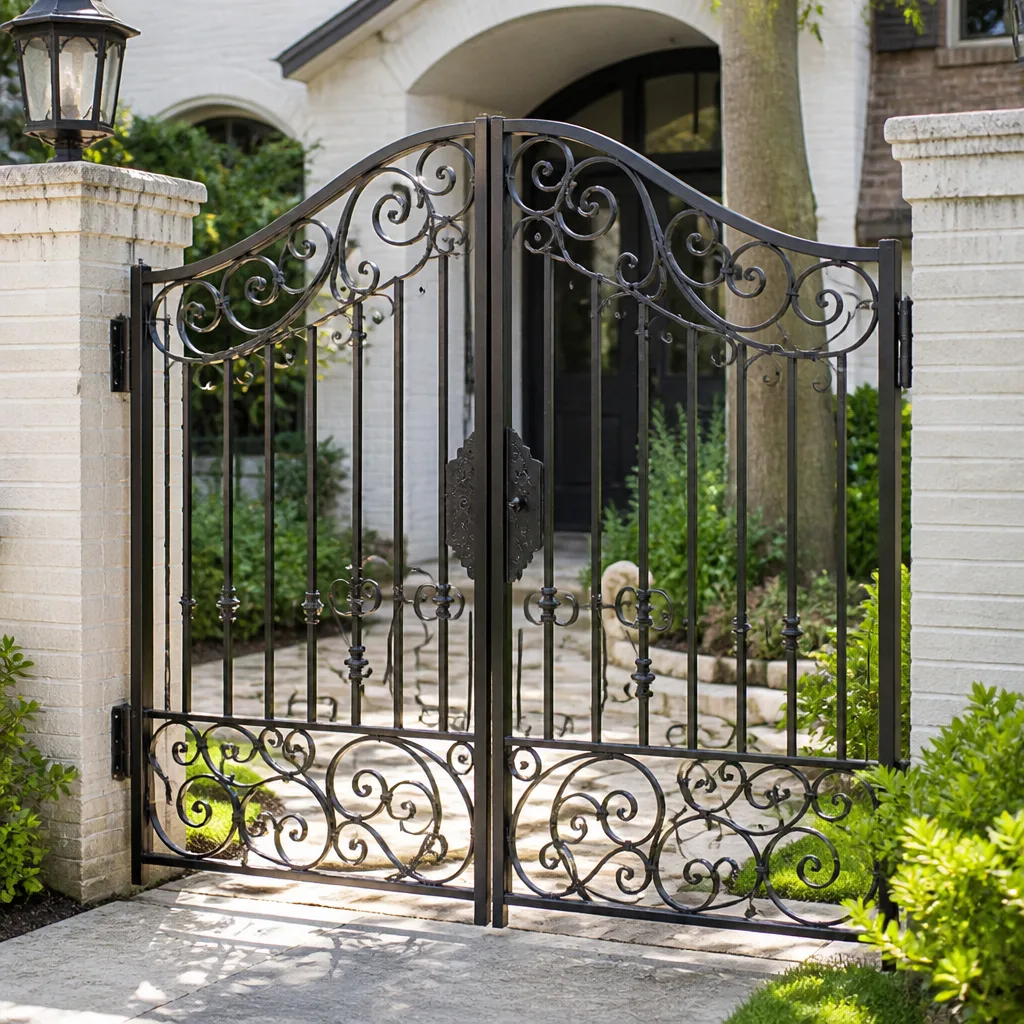 Wrought iron
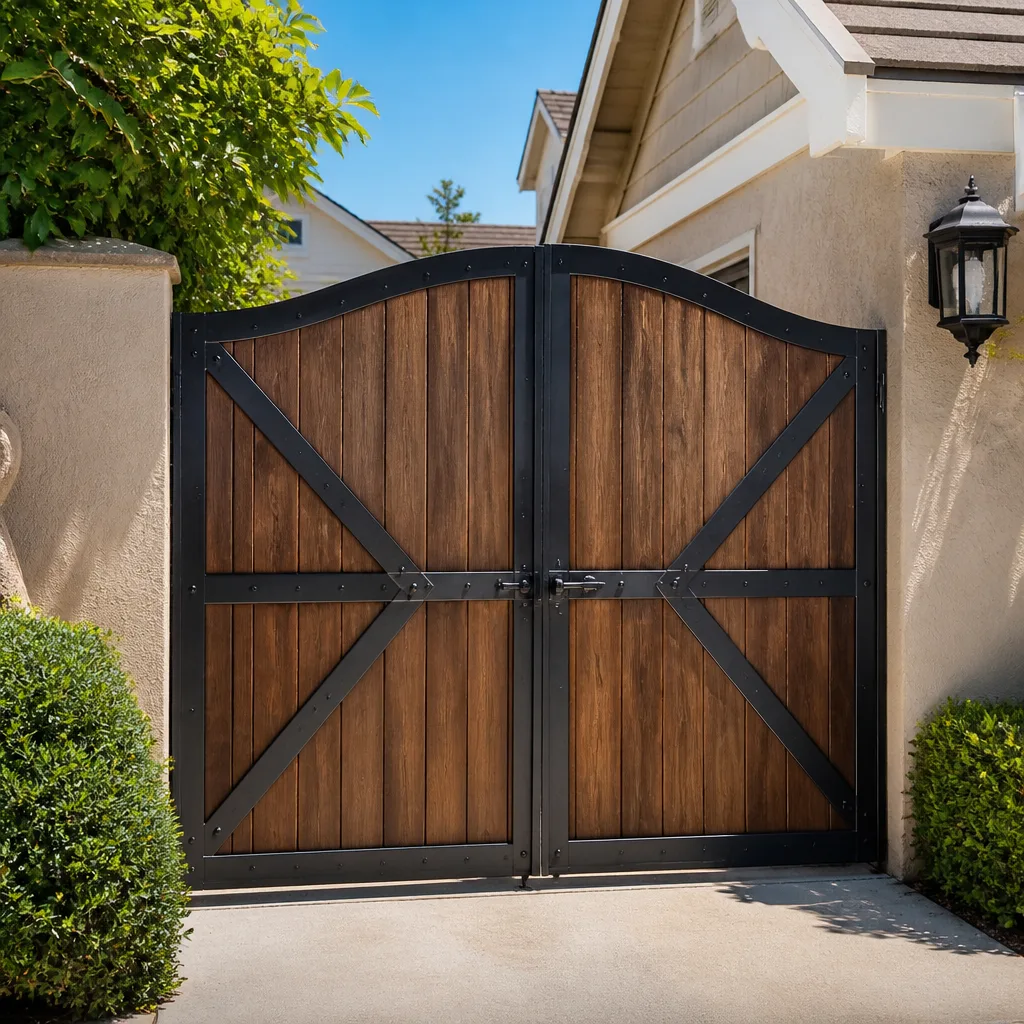 Wood & steel frame
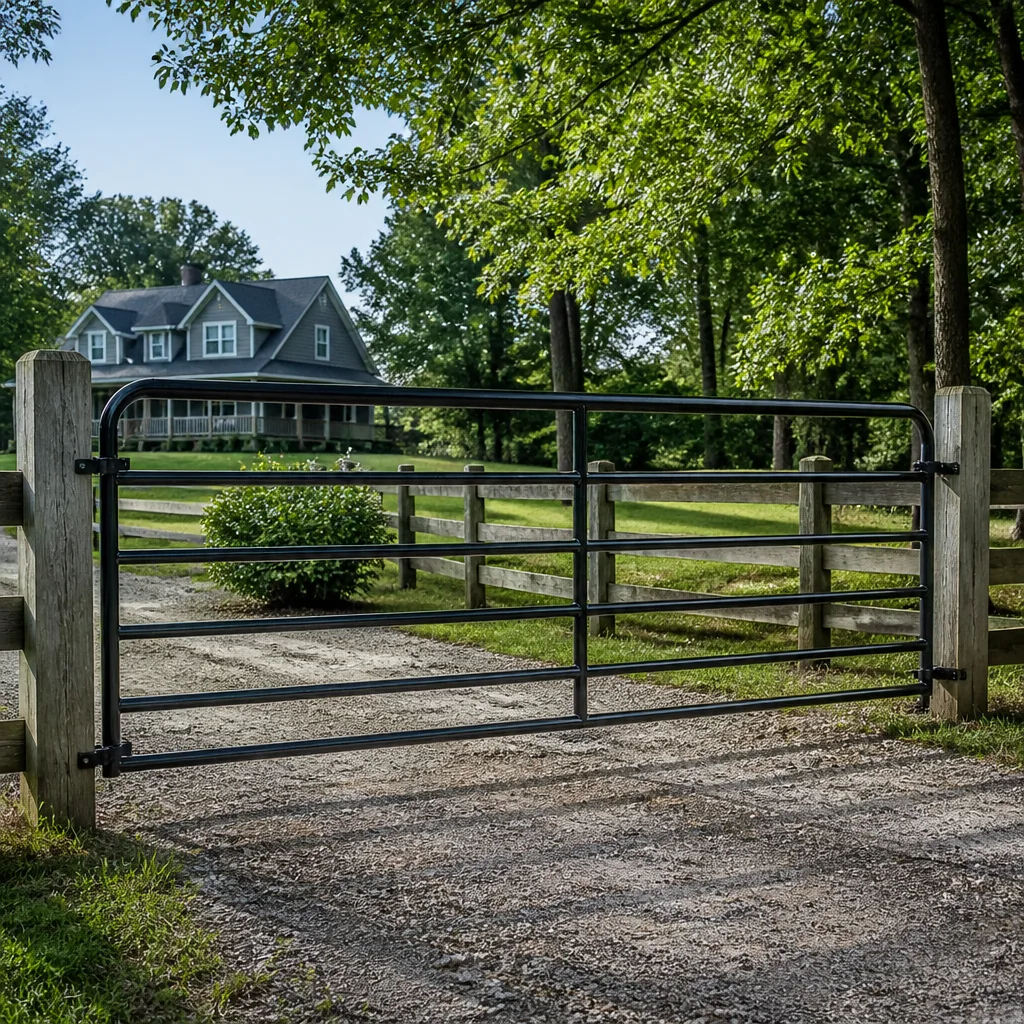 Farm & ranch
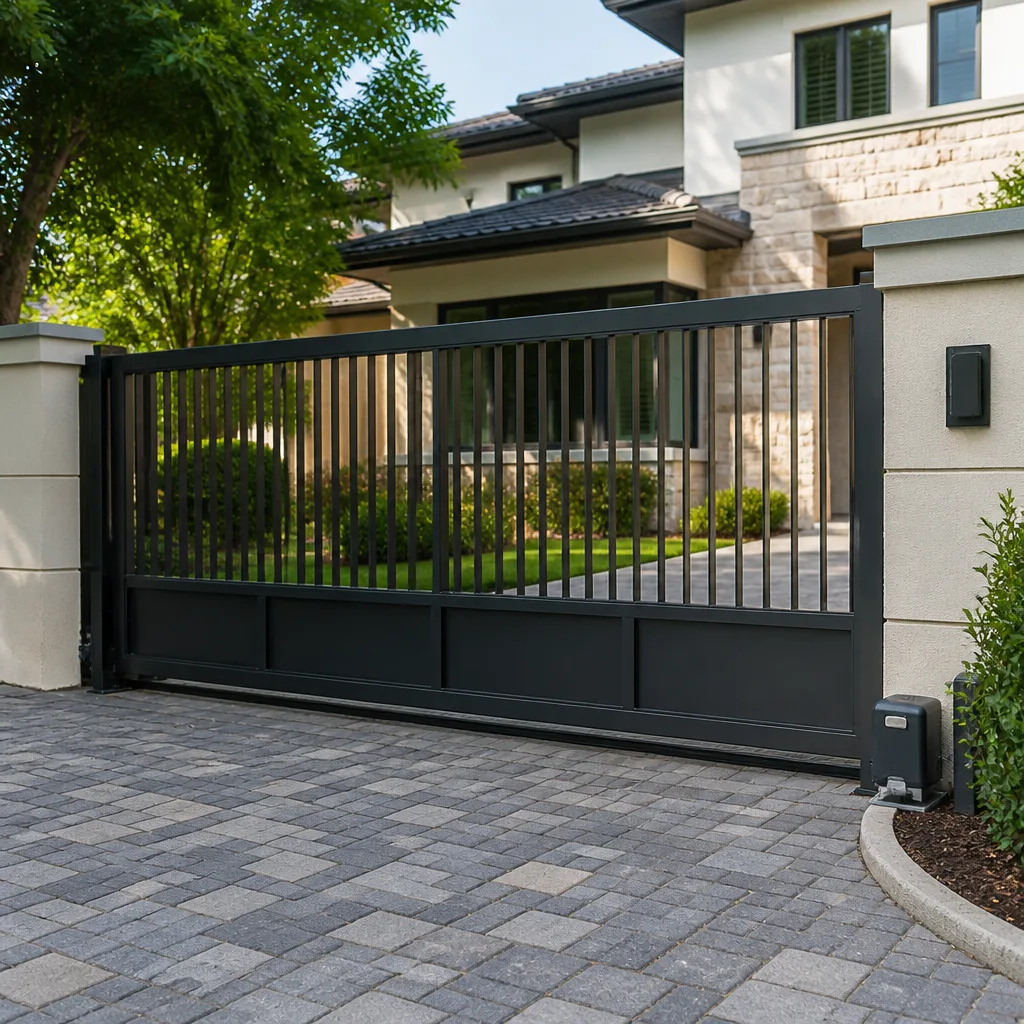 Sliding driveway gates
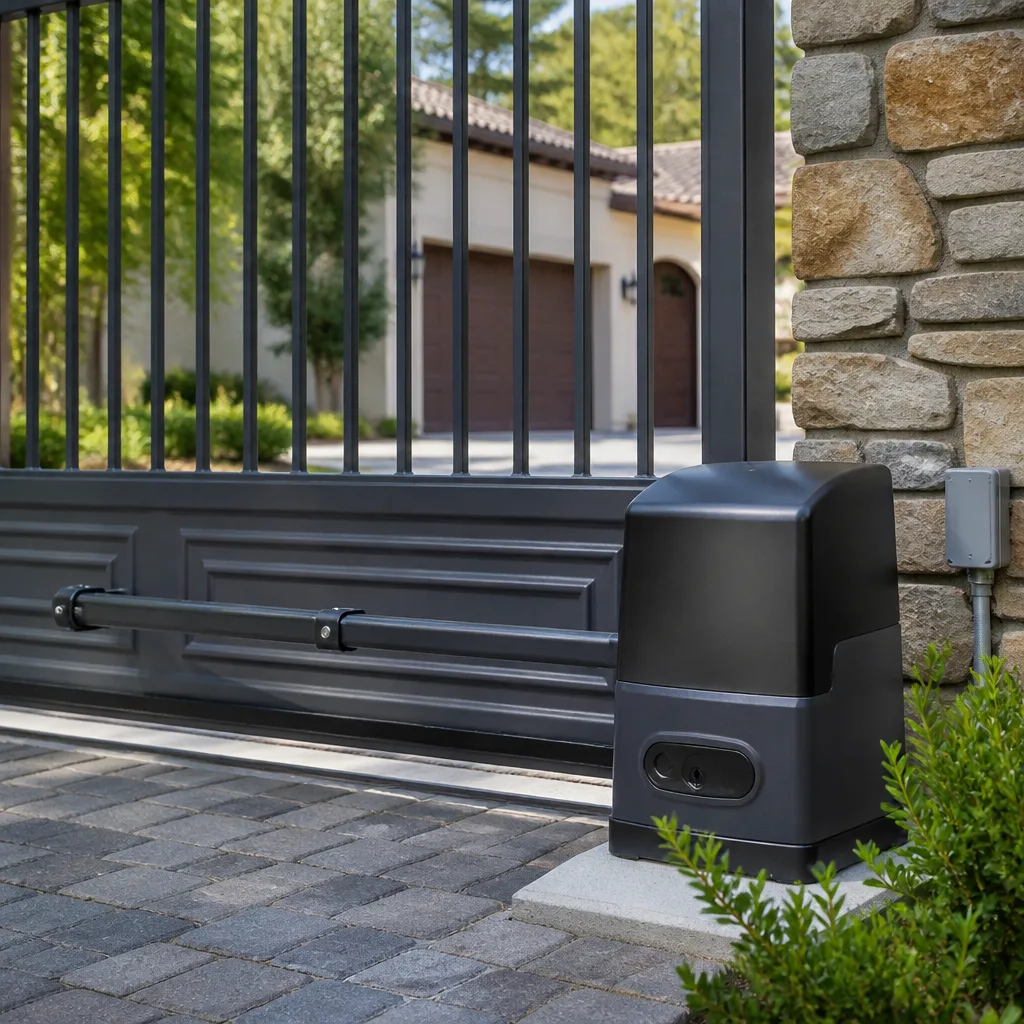 LiftMaster operators
Free on-site gate assessment - hinges, posts, and your LiftMaster or Nice gate operator checked before anything is quoted
The assessment is free and the quote is the invoice.
Get your free estimateGate Repair Emergency Preparedness Guide for Joliet Homes
If your automated gate is stuck in the closed position and you can’t reach a technician, most homeowners force the operator. That’s the mistake that turns a straightforward repair into a full operator replacement. The drive gear strips, the limit switches lose their reference, and what would have been a manageable fix becomes a much bigger job. The same instinct applies to a gate jammed open: people prop it, tie it, or leave it hanging on a bent hinge, and the panel or the post takes damage that didn’t have to happen. This guide walks you through the correct response to a gate emergency in Joliet, from manual release procedures by operator type to what to check after a vehicle impact. Read it before something goes wrong. Your gate, and your wallet, will thank you.
Quick Answer
A gate emergency in Joliet has a correct sequence: stop forcing the gate, identify the operator type, use the proper manual release, secure the opening, and call a gate specialist with the diagnostic details ready. Forcing a stuck operator or leaving a damaged gate swinging is how a repair becomes a replacement. The right first move is almost always to stop, assess, and release correctly rather than to push harder.
Styles & brands we work with
- Wrought iron
- Wood & steel frame
- Farm & ranch
- Sliding driveway gates
- LiftMaster operators
Table of Contents
- Manual Release Procedures by Operator Type
- Securing a Gate That’s Stuck Open
- Vehicle Impact Protocol: What to Check First
- Storm and Power Outage Gate Management
- What to Have Ready When You Call
- Common Mistakes to Avoid
- When to Call a Professional
- Frequently Asked Questions
Manual Release Procedures by Operator Type
The single most important skill in gate emergency preparedness is knowing how to put your operator into manual mode without damaging it. In a Joliet power outage or after a board fault, this is the difference between a gate you can move by hand and an operator you’ll be replacing. The release mechanism differs by operator type, and using the wrong procedure is how drive gears get stripped.
1. Chain-Drive Residential Operators (LiftMaster and Similar)
Most residential slide and swing operators in this category release with a manual release key or lever on the operator housing. Turn the key or pull the lever to disengage the drive, then move the gate by hand at a walking pace. Never yank the gate once it’s released; let it travel on its own track or hinge. If the release won’t engage, stop and call a specialist rather than forcing it.
2. Hydraulic and Electromechanical Operators (FAAC and BFT Types)
Many swing gate operators in the FAAC and BFT families use a manual release lever or a bypass key depending on the model. Locate the release point on the operator arm, follow the manufacturer’s release direction, and disengage before moving the gate. Hydraulic units can hold pressure even after release, so move slowly and check that the gate is truly free before pushing.
3. Slide Gate Operators with Manual Chains or Release Levers
Slide gates often have a manual release lever on the operator or a hand crank for the drive. Disengage the drive first, then walk the gate along its track. If the gate binds partway, stop; something is blocking the track or a wheel has failed, and continued movement can bend the gate frame.
Our technicians have up to 13 years of experience releasing and repairing these operator types across Joliet, and the one rule that applies to all of them is simple: release first, move second. If your gate won’t release or the operator makes grinding or clicking sounds when you try, that’s a sign the internal mechanism is already compromised. That’s the point to call for electric gate repair rather than keep working the release.
Securing a Gate That’s Stuck Open
A gate stuck open is a security problem, but the wrong fix creates a safety problem. Don’t rope, chain, or prop a heavy gate panel against the operator, and don’t wedge anything into the gate’s path or between the panel and the post. Heavy gate panels can crush hands and fingers, and a panel held under tension can swing or drop unexpectedly when the prop slips.
Here’s the safe sequence for securing an open gate without damaging the operator or creating a pinch hazard:
- Stop all power to the operator at the breaker or disconnect switch so it can’t try to close on its own.
- Release the operator into manual mode using the correct procedure for your operator type.
- Move the gate slowly to a stable position and check that it isn’t resting on the operator arm or drive.
- Secure the opening from the outside with a temporary barrier placed in front of the gate, not against the panel, so nothing is putting force into the gate structure.
- Post a visible warning at the gate so nobody tries to operate it while it’s compromised.
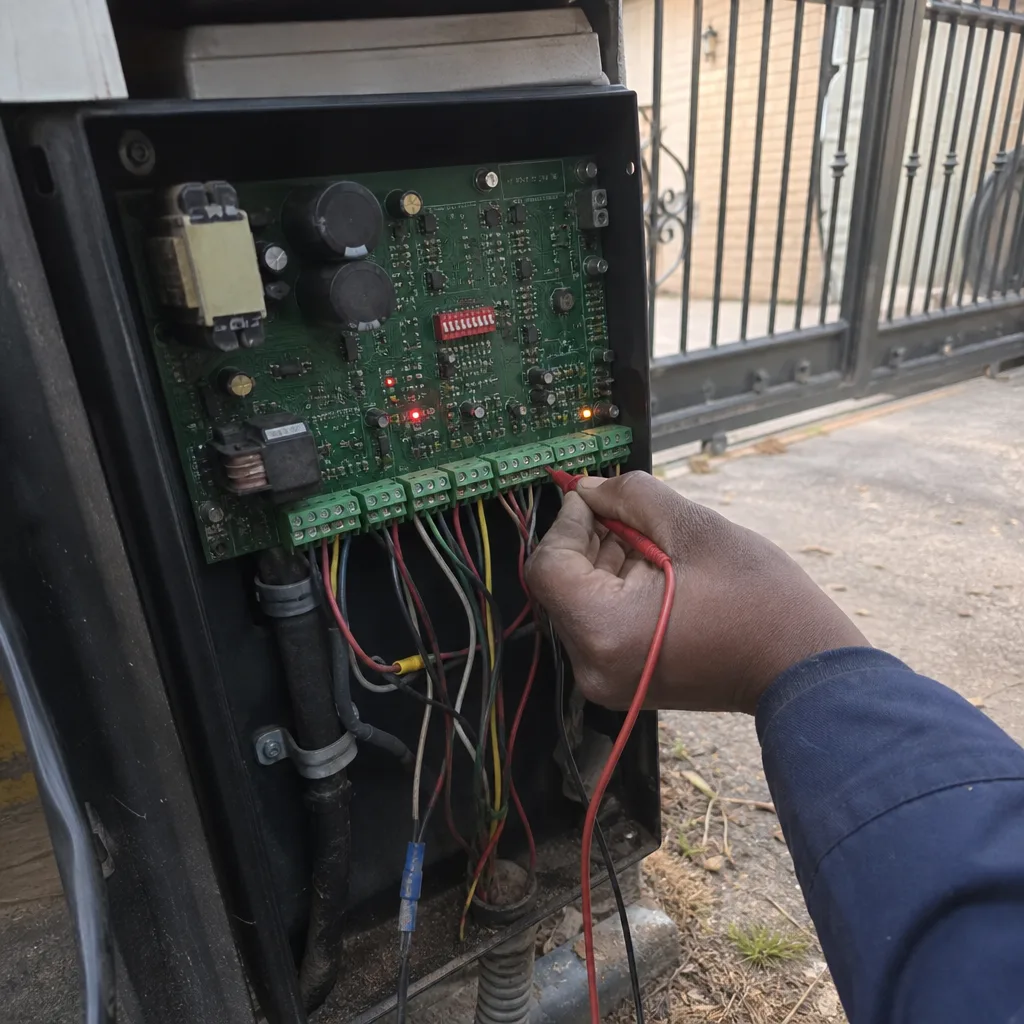
- Check the safety edges and photo-eyes for damage; if they’ve been hit or are dangling, don’t restore power until a technician inspects them.
If the gate is on a slope or a track with any grade, don’t leave it in a position where gravity can move it. On a Joliet property with a sloped driveway, that’s the scenario where an unsecured open gate does the most damage. From first installation to years of repairs, one specialist handling the whole gate is how you avoid the back-and-forth between contractors who each fix half the problem. For a broader look at what we handle, see gate repair.
Vehicle Impact Protocol: What to Check First
When a vehicle hits a gate, the gate panel usually looks worse than it is, and the post usually looks better than it is. That’s the counterintuitive part most homeowners get wrong. The post and its footing carry the load, and a post that’s been shifted, cracked, or pulled out of plumb will keep your gate from operating correctly no matter how straight the panel looks once it’s bent back.
Before you attempt to operate a gate that’s been hit, check these in order:
- The post and footing: Is the post plumb? Any crack at the base, any movement when you push on it, any gap where it meets concrete? A shifted post is a structural problem, not a cosmetic one.
- The hinge and track: Are the hinges bent, or is the slide track out of alignment? A bent hinge will bind the gate and overload the operator.
- The operator arm and drive: Is the arm bent, disconnected, or jammed? Don’t run the operator to “test” it if the arm is compromised.
- The safety devices: Photo-eyes, safety edges, and loop detectors in the driveway. If a loop detector was damaged by the impact, the operator may not know the gate’s position.
- The power and control wiring: Any exposed or damaged wiring near the impact point is a shock hazard. Don’t touch it; call a technician.
If the post has moved at all, treat the gate as non-operational until it’s been inspected. Forcing an operator against a misaligned post is how a bent panel becomes a burned-out motor. Vehicle impact is one of the most common calls we handle for Joliet properties, and in our experience the post condition decides whether it’s a repair or a rebuild.
Storm and Power Outage Gate Management
Joliet sees its share of summer storms and winter ice, and both bring gate problems: power outages that leave an operator stuck mid-cycle, and wind or ice that throws a gate off its track. The key to storm preparedness is knowing how to put your gate into manual mode before the outage, and how to bring it back to automatic operation correctly afterward.
Here’s the correct sequence for storm and outage management:
- Before the storm: Locate your operator’s manual release and know which procedure it uses. If you have a battery backup, confirm it’s charged. If you don’t, plan for manual operation.
- During the outage: Release the operator into manual mode and move the gate only as needed to secure the property. Don’t leave the gate in a position where wind or gravity can move it.
- After power returns: Don’t simply flip the breaker and run the gate. First check that the gate travels freely by hand, then re-engage the operator, then test the safety devices before letting it run automatically.
- Check the limits: If the gate was moved manually during the outage, the operator may have lost its limit reference. Watch the first automatic cycle closely; if the gate stops short or overtravels, the limits need to be reset.
- Inspect for storm damage: Look for debris in the track, bent hinges, and ice or water intrusion at the operator housing before restoring automatic operation.
If the operator won’t re-engage, or the gate runs but the safety devices don’t respond, stop and call a specialist. A gate that closes on a vehicle or a person because a photo-eye was damaged in the storm is the worst outcome of a preventable problem. Our technicians work with the major operator brands directly, including LiftMaster and FAAC, so we can diagnose control board and safety device faults rather than guess. Full lifecycle capability means the same specialist who installed or repaired the gate handles the storm recovery too.
What to Have Ready When You Call for Emergency Gate Repair
The information you have ready when you call is what lets a technician arrive with the right parts and the right diagnosis. Most gate emergencies that drag on for days are the ones where the caller can’t tell the dispatcher what operator they have or what the gate is doing. Have these details ready before you dial:
- The operator brand and model: LiftMaster, FAAC, BFT, Linear, or another brand. The model number is usually on a label inside the operator housing or on the control board cover.
- What the gate is doing: Stuck open, stuck closed, moving partway, reversing, grinding, or not responding to the remote at all.
- What changed: Was there a storm, an impact, a power outage, or did it fail on its own?
- The gate type: Slide or swing, and roughly how wide and heavy the panel is.
- The safety devices: Photo-eyes, safety edges, loop detectors, and whether any of them look damaged.
- The power situation: Whether the operator has power at the disconnect, and whether it has battery backup.
- Any manual release attempts: What you tried, and whether the release engaged or the operator made noise when you tried it.
With those details, a gate-only specialist can often identify the likely fault before arriving, which means the right control board, motor, or drive part comes with them. That’s the practical advantage of a specialist over a generalist: we work with control boards, loop detectors, and motor assemblies that most multi-trade contractors decline or misdiagnose. If your gate needs service now, call (855) 360-8227 for a free estimate. We answer 24/7, with fast dispatch from 7am to 7pm, Sunday through Friday.
Common Mistakes to Avoid
- Forcing a stuck operator by hand. This is the mistake that strips drive gears and turns a repair into a replacement. Always release the operator into manual mode first, using the correct procedure for your operator type.
- Propping a heavy gate panel against the operator or post. A prop can slip, and a heavy panel under tension can swing or drop. Secure the opening with a barrier in front of the gate, not against the gate structure.
- Running the operator to “test” it after a vehicle impact. If the post has shifted or the arm is bent, running the operator overloads the drive. Check the post condition first.
- Restoring power after an outage without checking the gate path. Debris, ice, and a manually moved gate can all cause the operator to run into a jam on the first automatic cycle.
- Ignoring a damaged safety edge or photo-eye. A gate that closes on a vehicle or a person because a safety device was compromised is the most serious outcome of a storm or impact event.
- Calling a generalist for an electric gate fault. Multi-trade contractors often decline or misdiagnose operator control board and loop detector problems. A gate-only specialist gets the diagnosis right the first time.
- Waiting to call until the gate is fully dead. A gate that’s grinding, reversing, or moving partway is telling you something is failing. Address it before it becomes an emergency.
When to Call a Professional
Call a gate specialist when the manual release won’t engage, when the operator makes grinding or clicking sounds, when the gate has been hit by a vehicle and the post has moved, when safety devices are damaged, or when the gate reverses or stops partway through a cycle. These are the situations where continued operation causes more damage. Electrical and operator faults are not a do-it-yourself job; the danger is in the operator’s wiring and power, plus heavy panels that can crush. Don’t open a control box or touch damaged wiring. Gate Repair Joliet offers free estimates in Joliet. Call (855) 360-8227. We answer 24/7, with fast dispatch from 7am to 7pm, Sunday through Friday.
Frequently Asked Questions
It depends on your operator type. Chain-drive residential operators usually release with a key or lever on the housing; hydraulic and electromechanical operators like FAAC and BFT types use a release lever or bypass key on the operator arm; slide gate operators often have a release lever or hand crank. Release first, then move the gate slowly by hand. If the release won’t engage, don’t force it. Call (855) 360-8227 for an exact quote on a repair; estimates are free.
Cut power at the breaker, release the operator into manual mode, move the gate to a stable position, and place a temporary barrier in front of the gate rather than against the panel. Don’t rope, chain, or prop a heavy panel. Check the safety edges and photo-eyes for damage, and don’t restore power until a technician inspects it. Call (855) 360-8227 to schedule a free estimate.
Check the post and footing first, not the panel. A post that’s shifted, cracked, or out of plumb is a structural problem that will keep the gate from operating correctly. Then check the hinges, track, operator arm, safety devices, and any exposed wiring. Don’t run the operator to test it if the post or arm is compromised. For a free estimate in Joliet, call (855) 360-8227.
Check that the gate travels freely by hand, then re-engage the operator, then test the safety devices before letting it run automatically. Watch the first cycle for limit errors, since manually moving the gate can throw off the limit reference. If the operator won’t re-engage or the safety devices don’t respond, stop and call a specialist. Call (855) 360-8227 for a free estimate.
Have your operator brand and model, what the gate is doing, what changed (storm, impact, or outage), the gate type, the condition of the safety devices, the power situation, and any manual release attempts you made. Those details let the technician arrive with the right part. Call (855) 360-8227. We answer 24/7, with fast dispatch from 7am to 7pm, Sunday through Friday.
We work directly with LiftMaster, FAAC, BFT, Linear, Viking, Ghost Controls, DoorKing, Elite, and Mighty Mule systems, covering the vast majority of residential and commercial operators. That means we can repair or update your existing equipment rather than default to a full replacement. Our technicians have up to 13 years of experience with these systems. For a free estimate, call (855) 360-8227.
The Bottom Line
A gate emergency in Joliet comes down to sequence: stop forcing the gate, identify the operator, release it correctly, secure the opening safely, and call a specialist with the diagnostic details ready. Forcing a stuck operator or leaving a damaged gate swinging is what turns a repair into a replacement. Know your manual release before you need it, check the post after an impact, and bring your gate back to automatic operation carefully after a storm. Our technicians have up to 13 years of experience, and we handle electric and automated gate repair as our core work. For a full picture of what we cover, start with Gate Repair Joliet. When you’re ready, call (855) 360-8227 for a free estimate. We answer 24/7, with fast dispatch from 7am to 7pm, Sunday through Friday.
Written by the team at Gate Repair Joliet.
See the difference
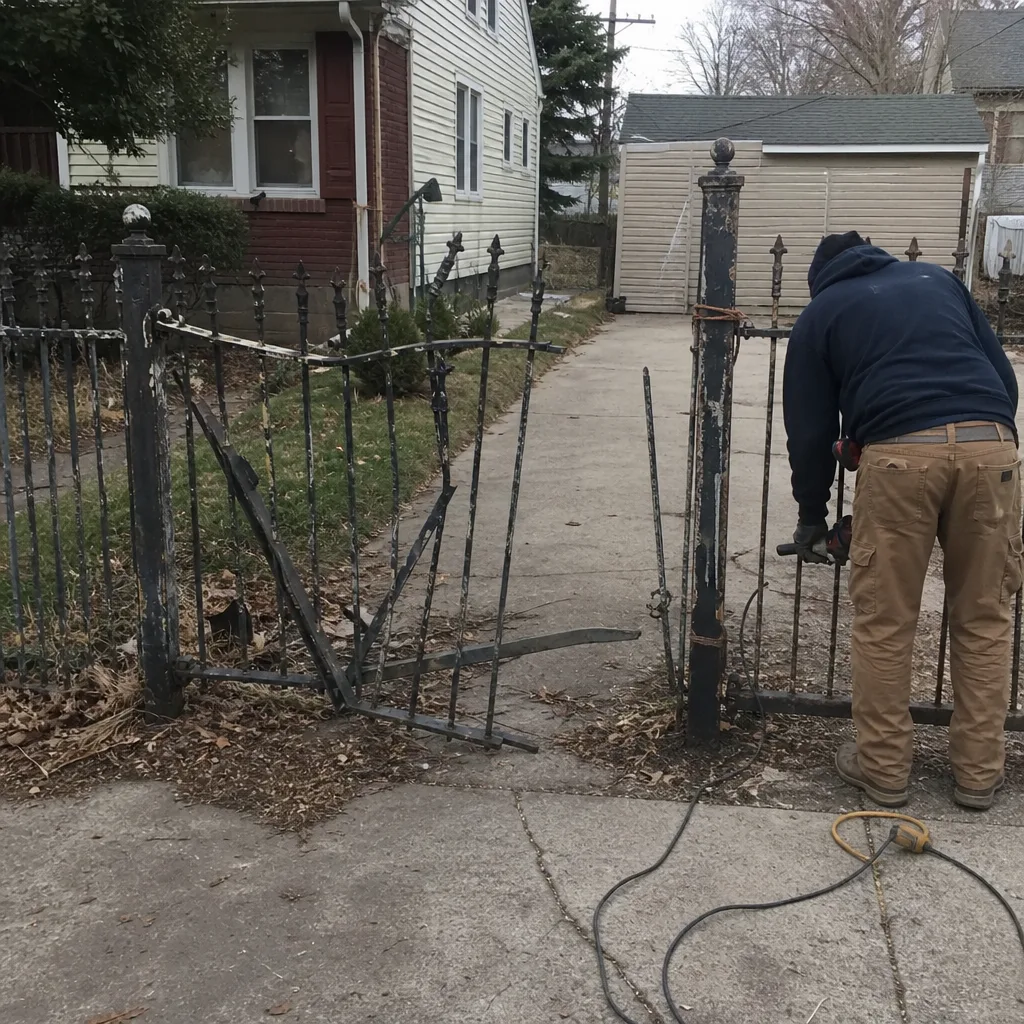 Before
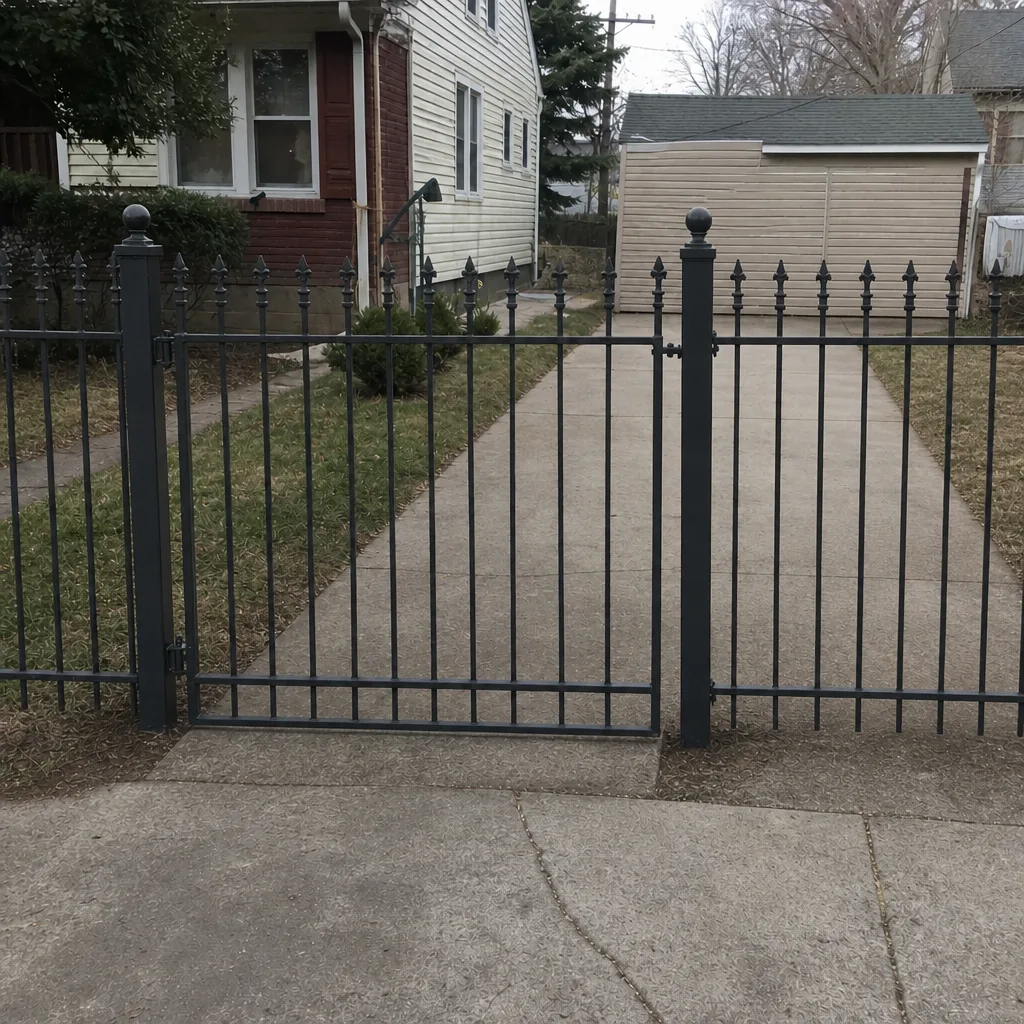 After
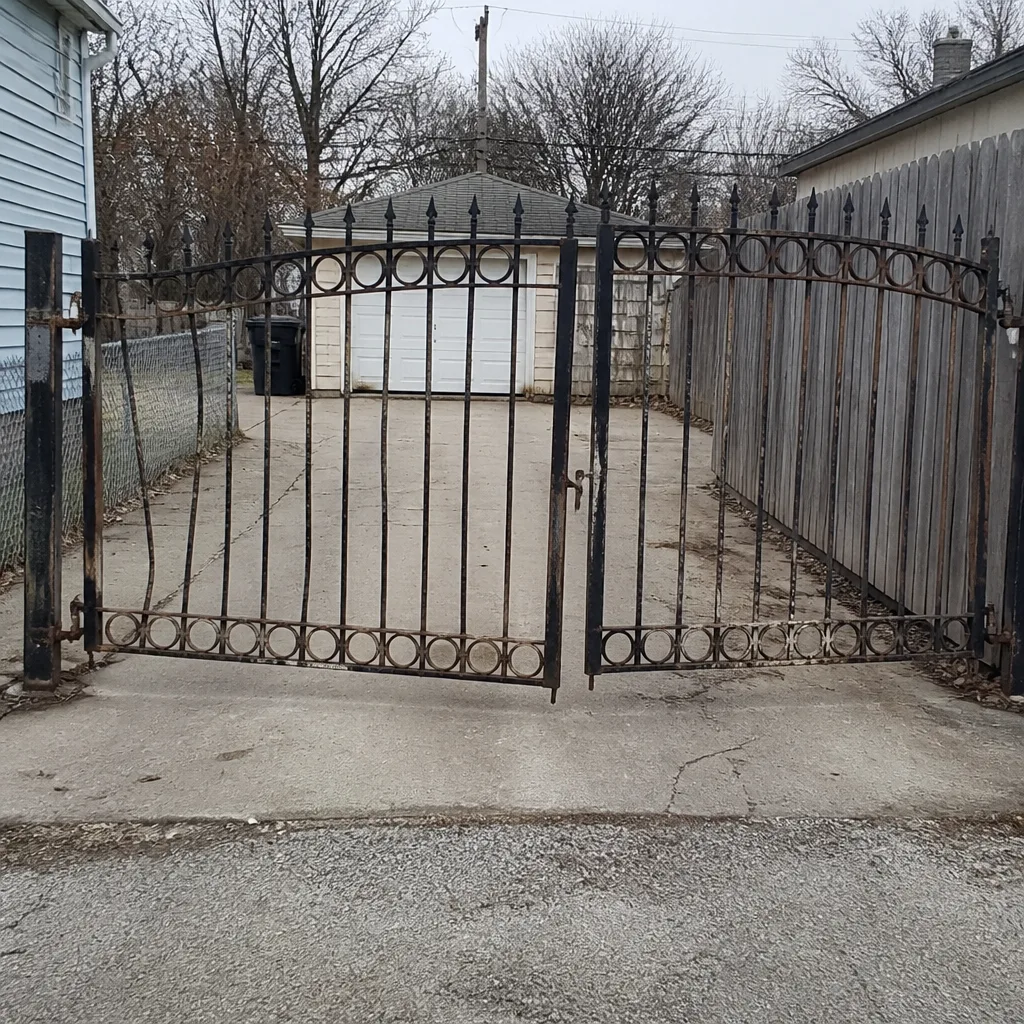 Before
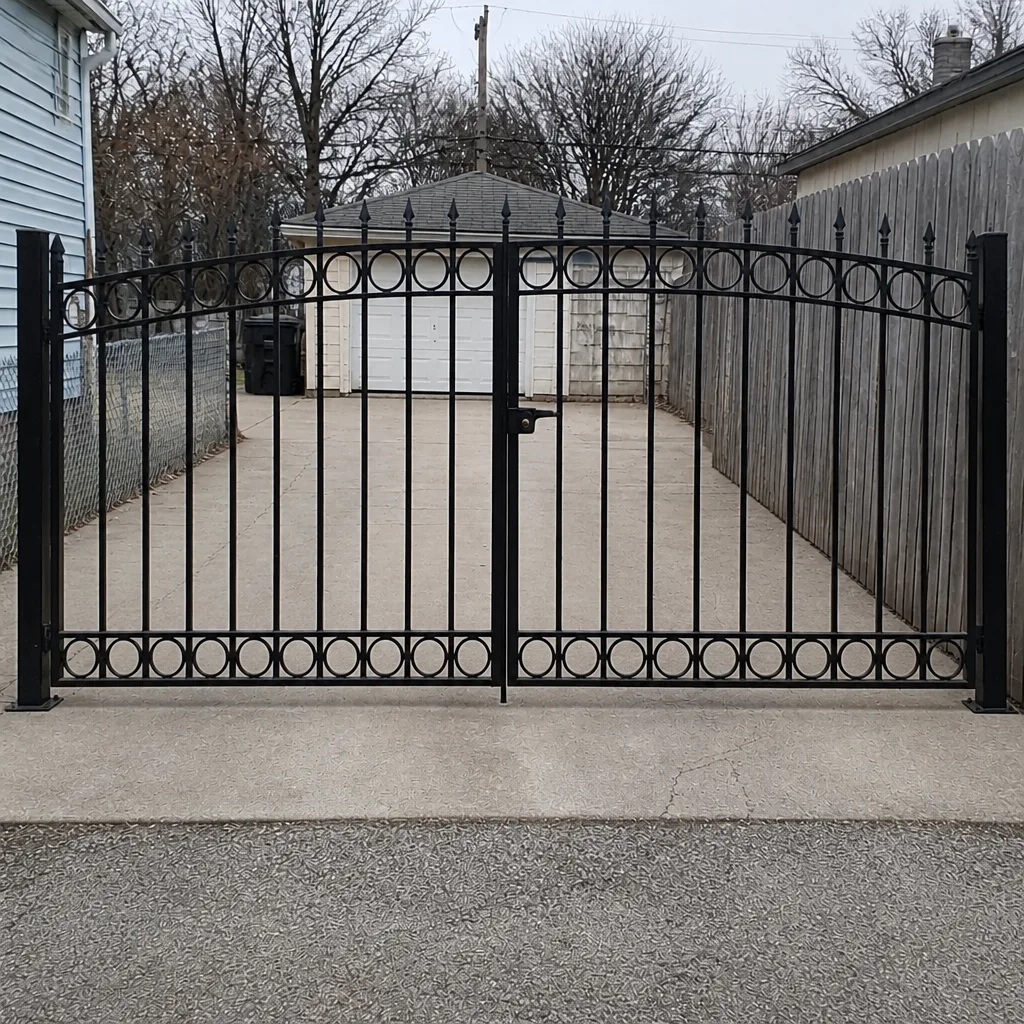 After
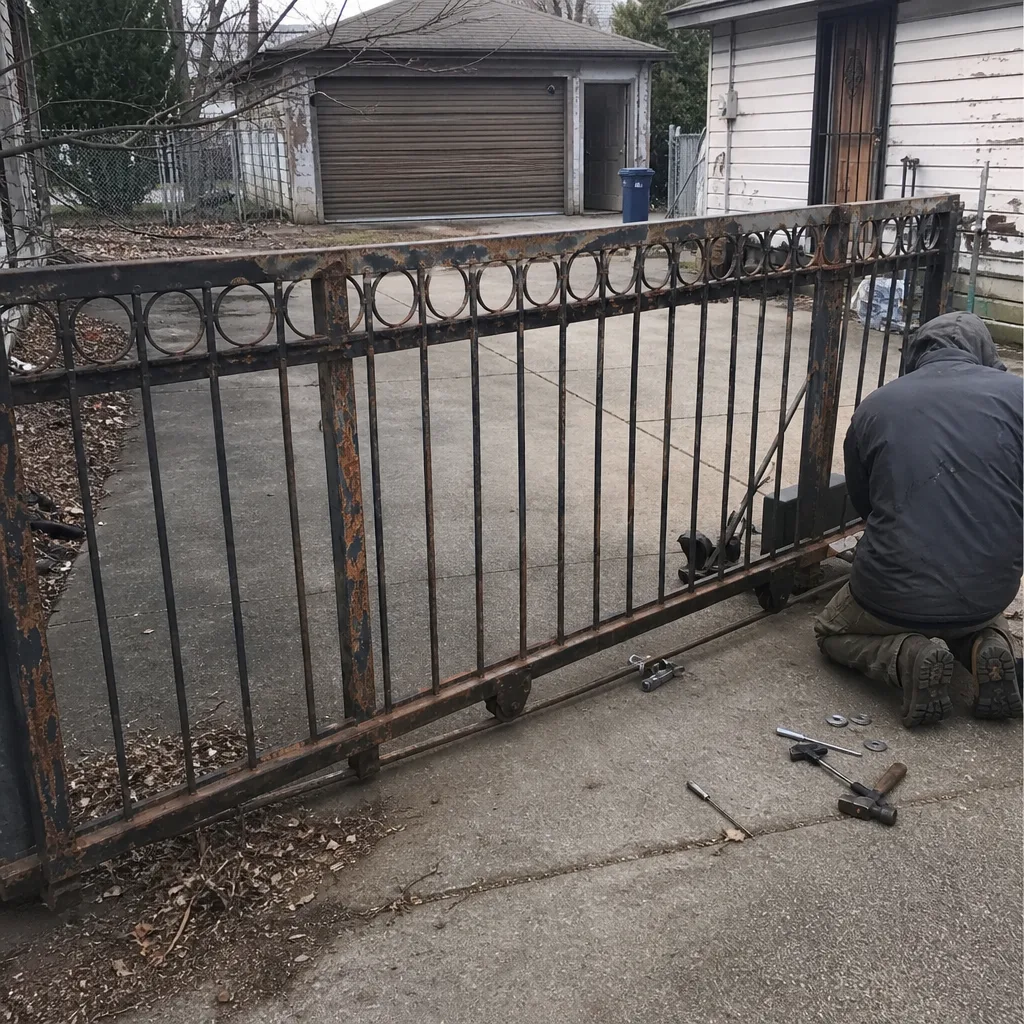 Before
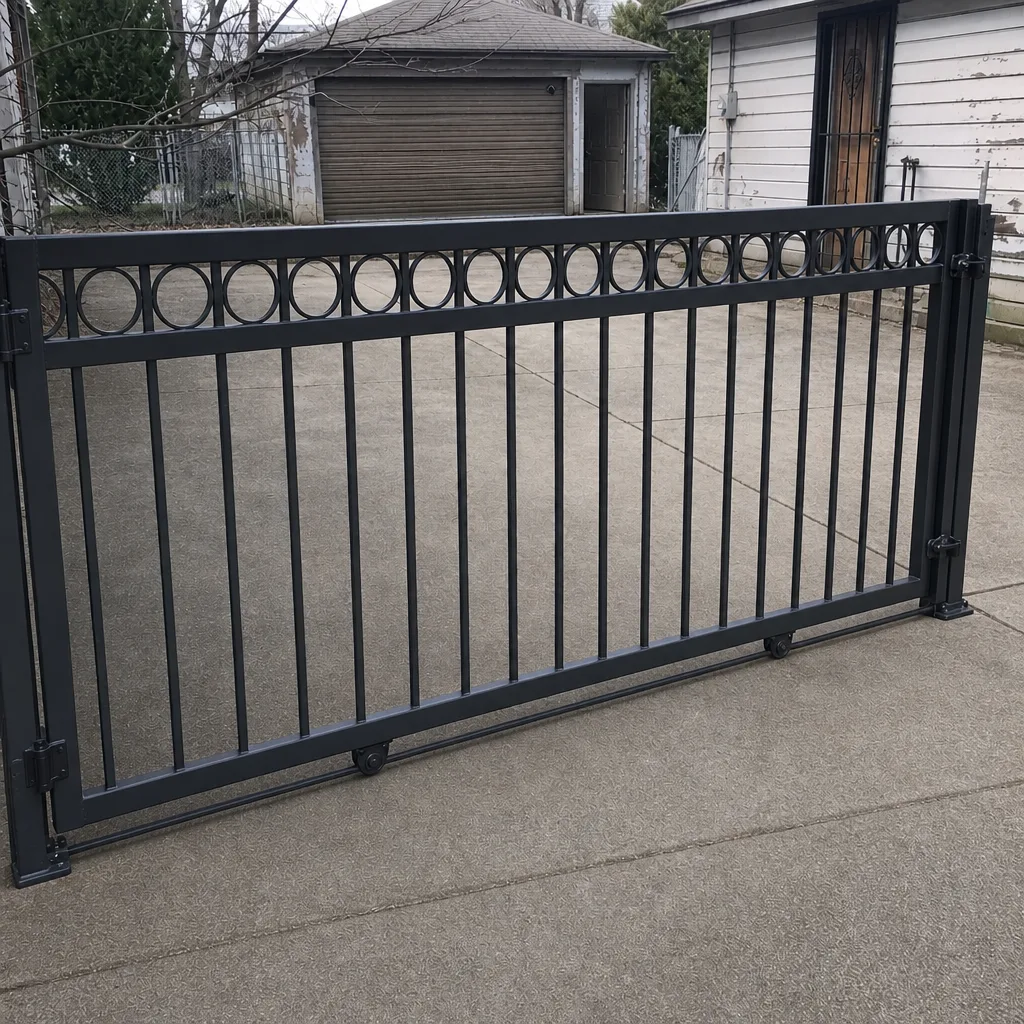 After