
Last updated November 16, 2026
 Wrought iron
 Wood & steel frame
 Farm & ranch
 Sliding driveway gates
 LiftMaster operators
Free on-site gate assessment - hinges, posts, and your LiftMaster or Nice gate operator checked before anything is quoted
The assessment is free and the quote is the invoice.
Get your free estimateGate Repair Permits, Codes & Inspections in Joliet, IL: What You Need to Know
A gate operator wired in without an electrical permit in Joliet is more than a code violation. It’s a gap your homeowner’s insurance can point to if someone is hurt by that gate. Most homeowners assume a gate is a private improvement nobody inspects. The opposite is true once a motor, a control board, or new wiring is involved, and once height or setback changes, zoning gets a vote too. This guide walks through what’s routine maintenance and what needs a permit, the entrapment protection rules that govern automated gates in Illinois, Will County zoning issues that surface during structural repairs, and how to check work a previous owner left behind. We’ll also walk through the inspection itself so you know what a Joliet inspector looks at and how to get ready.
Quick Answer
In Joliet, routine gate repair (hinges, latches, wheels, a swapped control board, a replaced operator of the same type) usually doesn’t require a building permit, but new electrical circuits, new or relocated wiring, and structural changes that alter a gate’s height, setback, or sight-line clearance can require permits and inspection. Illinois entrapment protection requirements apply to automated gates, and any change to the safety devices on a powered gate should be treated as a code matter, not a tune-up. When in doubt, ask the City of Joliet before the work starts; a five-minute call prevents a much longer problem at resale.
Styles & brands we work with
- Wrought iron
- Wood & steel frame
- Farm & ranch
- Sliding driveway gates
- LiftMaster operators
Table of Contents
- Which Gate Repairs in Joliet Need a Permit?
- Electrical Permits for Automated Gate Work
- Illinois Entrapment Protection Requirements
- Will County Zoning: Height, Setback, and Sight Lines
- What a Joliet Inspector Checks and How to Prepare
- How to Verify a Permit and Handle Previous Unpermitted Work
- Why Unpermitted Gate Work Can Affect Insurance and Resale
- Common Mistakes to Avoid
Which Gate Repairs in Joliet Need a Permit?
The line most homeowners miss is between repairing existing equipment and changing the system. Replacing a worn hinge, a broken latch, a damaged roller wheel, or a sagging post cap is routine maintenance and doesn’t need a permit. So is swapping an operator control board, a receiver, or a photo-eye sensor of the same type, provided no new wiring runs and no circuit is added. The work fixes what’s there without altering the system.
A permit usually enters the picture when the work crosses one of these thresholds:
- New electrical circuits or outlets for a gate operator, even if the operator itself isn’t new.
- Relocating or replacing wiring in a way that changes the electrical layout.
- Changing the operator type in a way that requires different power, different anchorage, or new safety devices.
- Structural changes that affect gate height, setback from a property line, or sight-line clearance at a driveway.
- Replacing an entire gate assembly rather than repairing the existing one.
In our experience, this is where a homeowner can get caught. A technician replaces a swing operator with a sliding one, or runs a new power line out to a gate post, and nobody pulls a permit. The gate works. Five years later, a buyer’s inspector flags a powered gate with no paper trail, and the explanation gets awkward. If you’re checking a repair against these thresholds right now, our Gate Repair Joliet page covers what our technicians handle day to day, and we can tell you over the phone which category your job falls into.
One more nuance worth knowing: because Joliet sits in a climate with meaningful freeze-thaw swings through winter and spring, gate posts heave and gates drift out of plumb. A post reset is almost always routine repair. Replacing or repositioning a post in a way that changes the setback is a zoning question, not just a repair. The fix and the permit can both be needed on the same visit.
Electrical Permits for Automated Gate Work
An electric gate is an electrical installation, and in Joliet that means a licensed electrician and, in most cases, an electrical permit before the circuit goes in. The permit covers the new circuit, the disconnect, the conduit run, and the grounding, which is exactly the part a gate-only contractor shouldn’t sign off on alone even when they do the mechanical and control work. This is also where we see the biggest gap in homeowner expectations. The gate installer handles the operator. The electrician handles the power. Both should have paper.
Here’s how a properly sequenced automated gate job usually goes:
- Confirm the scope. Is the existing circuit being reused, or is a new circuit being run? Reuse of an existing, permitted circuit is usually straightforward. A new run is not.
- Pull the electrical permit for new work, wiring changes, and any new disconnect or outlet.
- Do the electrical rough-in and leave it accessible for inspection before the trench or conduit is closed.
- Inspect the rough-in, then close it up and finish the mechanical install.
- Final inspection with the operator, safety devices, and emergency release in place and functional.
That sequence matters because a technician who skips step two can get the gate working in an afternoon and leave you holding a non-compliant install. Automated gate work is core to what we do, and it’s why we treat the electrical scope as its own line item rather than something to sort out after closing. If you want to know how that split looks on a typical repair, our electric gate repair page walks through the control-board, loop-detector, and motor-assembly work we handle directly. When power, trenching, or a new panel circuit is involved, we’ll tell you a licensed electrician and permits are part of the plan.
One practical note for Joliet properties with detached garages or gates set far back from the house: the further the circuit travels, the more the inspection looks at conduit depth, grounding, and any subpanel. Plan the permit around the full run, not just the gate operator’s immediate location.
Illinois Entrapment Protection Requirements
Illinois, like most states, treats automated gates as a potential entrapment hazard and requires protection against a person being caught, crushed, or injured by a moving gate. In practice, that means the safety devices on a powered gate (photo-eyes, safety edges, loop detectors, and the operator’s inherent reversing or obstruction-reversal function) aren’t optional accessories. They’re the part of the installation that keeps a powered gate legal and safe. Any repair that touches those devices has to leave them working correctly, and any replacement has to bring them up to the requirement, not just reinstall whatever was there.
What that means for a Joliet homeowner or property manager:
- Photo-eyes must be correctly positioned and aligned. A misaligned pair is the most common cause of a gate that stops mid-travel.
- Safety edges must respond before injury, not after. A worn edge that no longer trips the operator needs replacement, not adjustment.
- Loop detectors must reliably detect vehicles and hold the gate open when a car is over the loop.
- Manual release must work. If the gate can’t be opened by hand in an emergency, the install isn’t complete.
- Reversing function must be tested after any wiring or control-board change.
This is where gate-only focus matters. A generalist contractor who works on gates once in a while tends to misdiagnose a photo-eye obstruction as a bad motor, or bypasses a safety edge to “get the gate moving again.” Bypassing a safety device is a liability, not a fix. Even the simplest residential systems, whether a Linear or a Ghost Controls kit, have specified entrapment behavior, and it should stay in place. This is the kind of body of detail a trained gate technician carries, and it’s how we approach every automated repair. We won’t leave a gate operating with a disabled safety edge; we’d rather tell you the part is on order than hand back a gate that could injure someone.
If the gate operator is a commercial model, the requirements are stricter. Slide and swing gates at a business or a multi-unit property often need more loops, more edges, and warning signage. Confirm the specification with the city before the repair is closed out.
Will County Zoning: Height, Setback, and Sight Lines
A gate repair is usually a maintenance matter, but the moment a repair becomes a structural change, Will County zoning enters the conversation. The three variables inspectors and planners care about most are height, setback, and sight-line clearance at the driveway.
Height. Residential fence and gate heights are typically limited, and a gate taller than the surrounding fence line may draw a question. A repair that doesn’t change height is routine. A repair that raises the gate, or replaces a low gate with a taller one, can trigger a height review.
Setback. Gates must sit at or behind the property line’s required setback, and corner lots often face tighter constraints because sight-line clearance affects both driveways. If a repair involves repositioning posts, changing the gate’s location, or shifting it toward the street, check the setback before the anchors go in.
Sight-line clearance. The area near the driveway apron and any adjacent corner has to let drivers see approaching traffic. A solid gate that obscures a sight triangle can be flagged even when the height is fine. Repairs that add paneling, replace a see-through gate with a solid one, or widen the gate are the ones to check first.
We’ve seen homeowners pull a repair permit, then discover during the inspection that the existing gate was never at the right setback to begin with. That’s a zoning matter, not a gate repair matter, and the fix may involve moving the assembly. Ask the City of Joliet’s planning or zoning desk before the work begins. A phone call is cheap; a stop-work order after the posts are set is not.
What a Joliet Inspector Checks and How to Prepare
When a permit is issued for gate or electrical work in Joliet, the inspection is usually brief and practical. The inspector looks at the parts that govern safety and code compliance, not the aesthetics of your gate. Preparing properly is mostly about access and documentation.
Here’s what an inspector typically reviews on automated gate work:
- Permit and plans on site, matching the scope that was approved.
- Electrical connection: conduit, grounding, disconnect, and any subpanel.
- Entrapment devices: photo-eyes, safety edges, loops, and reverse function tested live.
- Manual release and emergency access, working and accessible.
- Gate operation through the full cycle, open, pause, and close, with safety devices triggering correctly.
- Height and setback verification if the scope included structural changes.
- Signage where required for the gate type and location.
To prepare, clear the gate’s travel path, make sure the electrical panel and disconnect are accessible, and have the permit and any plans ready. If you’ve had a safety edge replaced or a control board swapped, know which parts were changed so the inspector isn’t working from a guess. If the inspection is failing on a safety device, that’s often a part-availability issue rather than an installation error, and a gate specialist with experience across FAAC, BFT, Linear, and other systems can usually source and fit the correct part faster than a generalist. Our technicians have up to 13 years of experience, and we’ve walked through plenty of inspections with homeowners who weren’t sure what to expect. We’re happy to explain what’s likely to come up on yours before the appointment.
How to Verify a Permit and Handle Previous Unpermitted Work
Verifying a permit in Joliet is straightforward once you know where to look. The City of Joliet’s building department keeps permit records, and a quick records request will tell you whether a permit was pulled, whether it was inspected, and whether it was closed out. If the gate or operator was installed under a prior owner, this is the first thing to check before any repair that touches the electrical or structural parts of the system.
Here’s a practical sequence for verifying a completed permit:
- Request the permit record from the City of Joliet building department, with the property address.
- Confirm the permit scope matches what’s on the property, including operator type and safety devices.
- Check for a final inspection record; a permit is not complete until the inspection is signed off.
- Compare the install against the permit: an operator model or safety-device mismatch is a flag.
- If anything is incomplete, ask the city what it takes to close the permit now, before a sale or a claim forces the issue.
If you discover that a prior owner’s gate work was never permitted, you’re not stuck. In most cases the path forward is a permit and inspection on the existing installation, with corrections made where the work doesn’t meet current requirements. A gate that runs without proper entrapment protection may need those devices added. A circuit pulled without a permit may need to be inspected or brought up to code. Either way, it’s better to know now than to have a buyer’s inspector find it later. If you’re weighing a repair against replacement and want to talk through the paperwork side, our gate repair team can help you sort out what the job actually needs before you commit to a scope.
Why Unpermitted Gate Work Can Affect Insurance and Resale
The insurance consequence of an unpermitted gate isn’t hypothetical. If an automated gate injures someone and the gate was wired or installed without the required permits and inspections, your insurer’s adjuster will look at whether the installation complied with code. Unpermitted, uninspected work is a coverage question in the making, and the burden falls on you as the property owner, not the contractor who skipped the paperwork.
The resale picture is similar. A buyer’s inspector who spots a powered gate with no permit history will ask for records. If you can’t produce them, the buyer may negotiate, delay, or walk. Either way, the cost of unpermitted work lands on you. That’s why we start every automated gate conversation with the electrical and permit scope rather than the motor swap. It sounds less exciting. It’s the difference between a gate that’s working and a gate that’s protected.
For landlords and property managers in Joliet, the stakes compound. A multi-unit property with an automated entry gate carries the entrapment risk in every direction, and the insurance file needs to be clean. We treat commercial gate work with that in mind and will tell you when a permit is part of the answer.
Common Mistakes to Avoid
- Skipping the electrical permit for a new circuit. A new power run to a gate post almost always needs one, and the inspection happens before the conduit is closed.
- Bypassing a safety edge or photo-eye to get the gate moving. It’s a liability, not a repair, and it’s the first thing an inspector will catch.
- Assuming a same-type operator swap needs no paperwork. Reuse of an existing permitted circuit usually doesn’t, but a new operator that needs new power or new safety devices does.
- Ignoring setback when resetting posts. A post reset is routine; a post reset that moves the gate toward the property line or the street may be a zoning change.
- Not checking a prior owner’s permit history. The gate may be running fine and still have no inspection record, which becomes your problem at sale or after a claim.
- Using a generalist for automated work. A contractor who doesn’t routinely work with control boards, loop detectors, and safety edges tends to over-replace parts or under-repair safety devices.
- Treating a freeze-thaw tilt as cosmetic. In a Joliet winter, a gate that drifts out of plumb can bind against its posts and burn out the operator over time; address the tilt before it becomes an operator replacement.
See the difference
 Before
 After
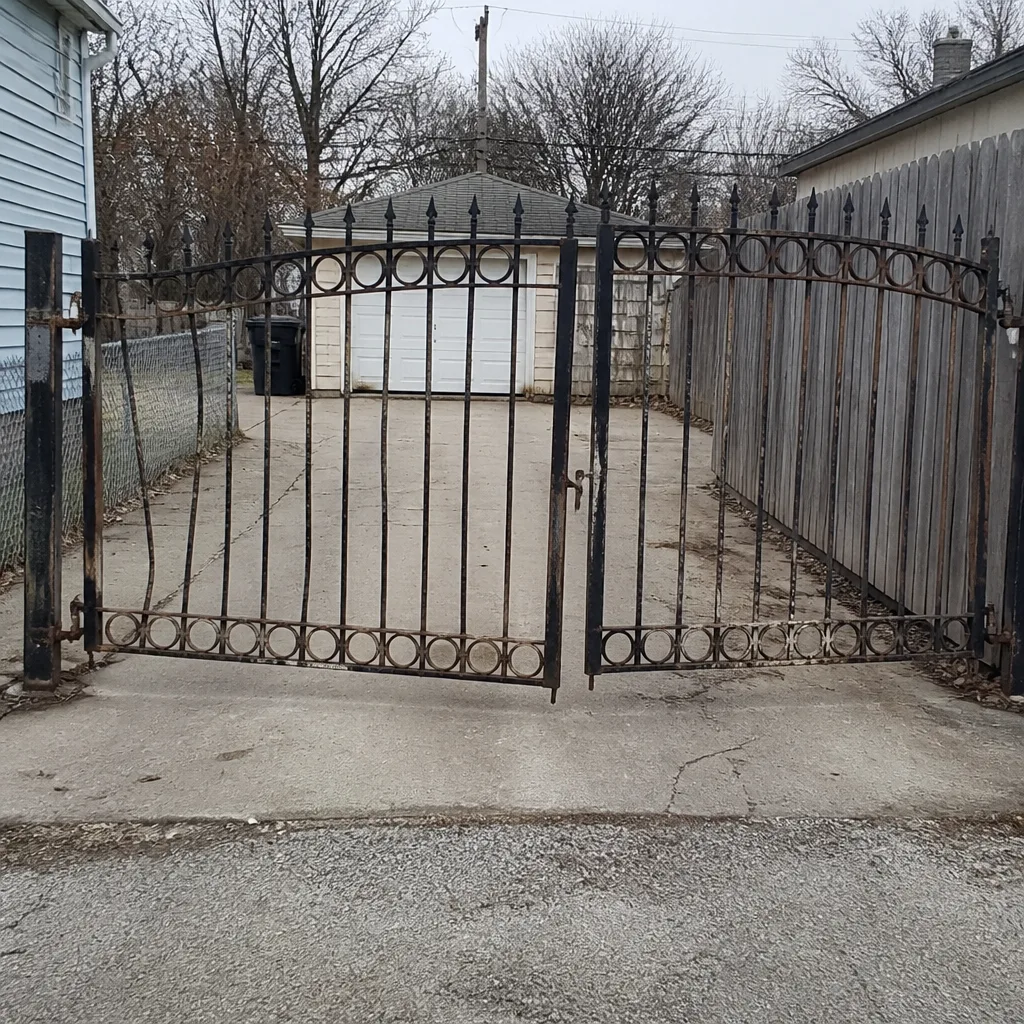 Before
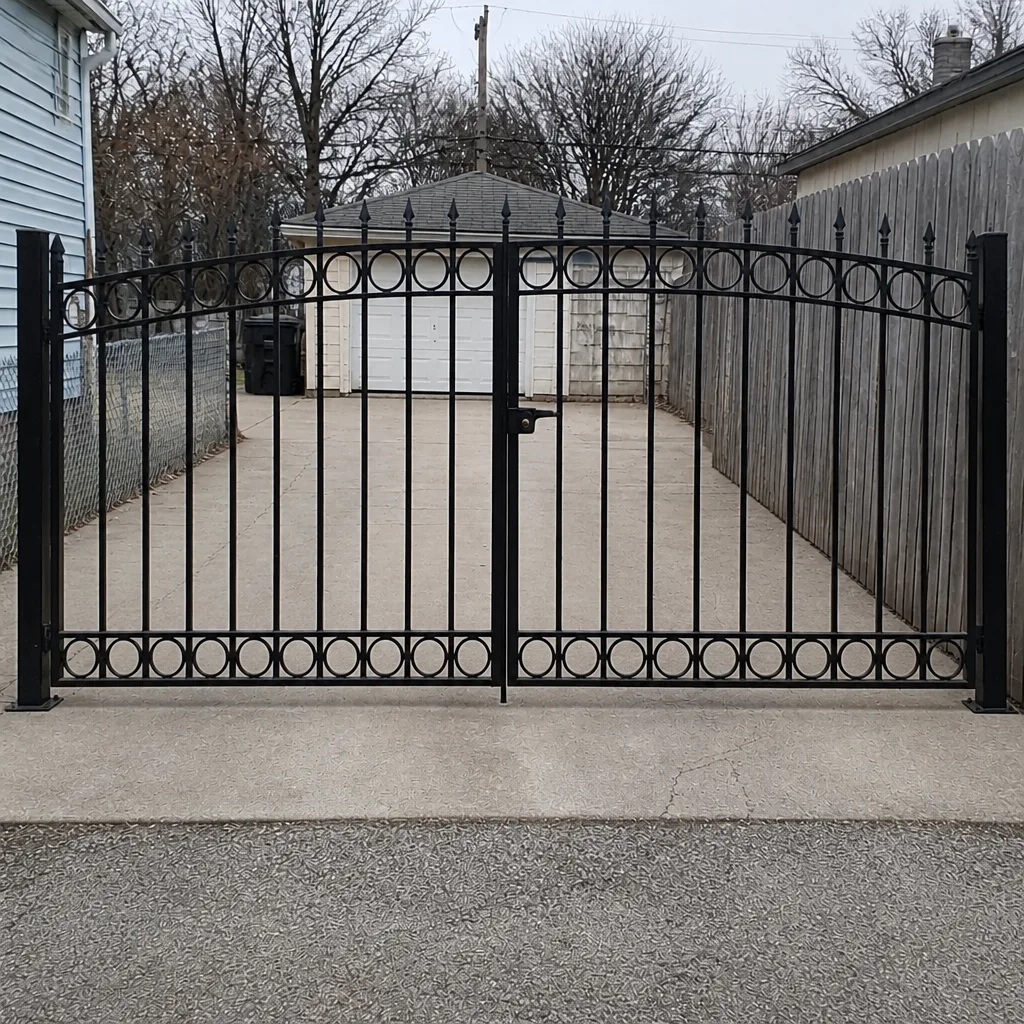 After
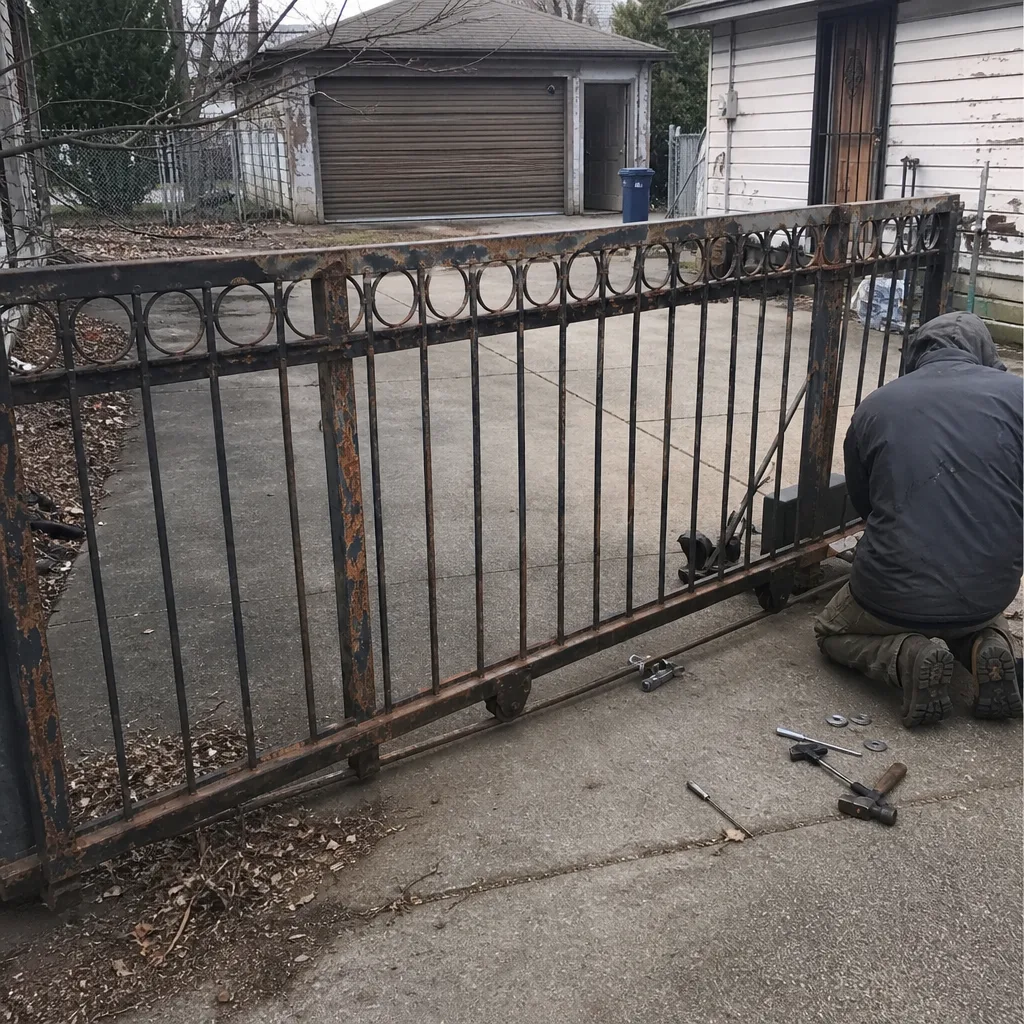 Before
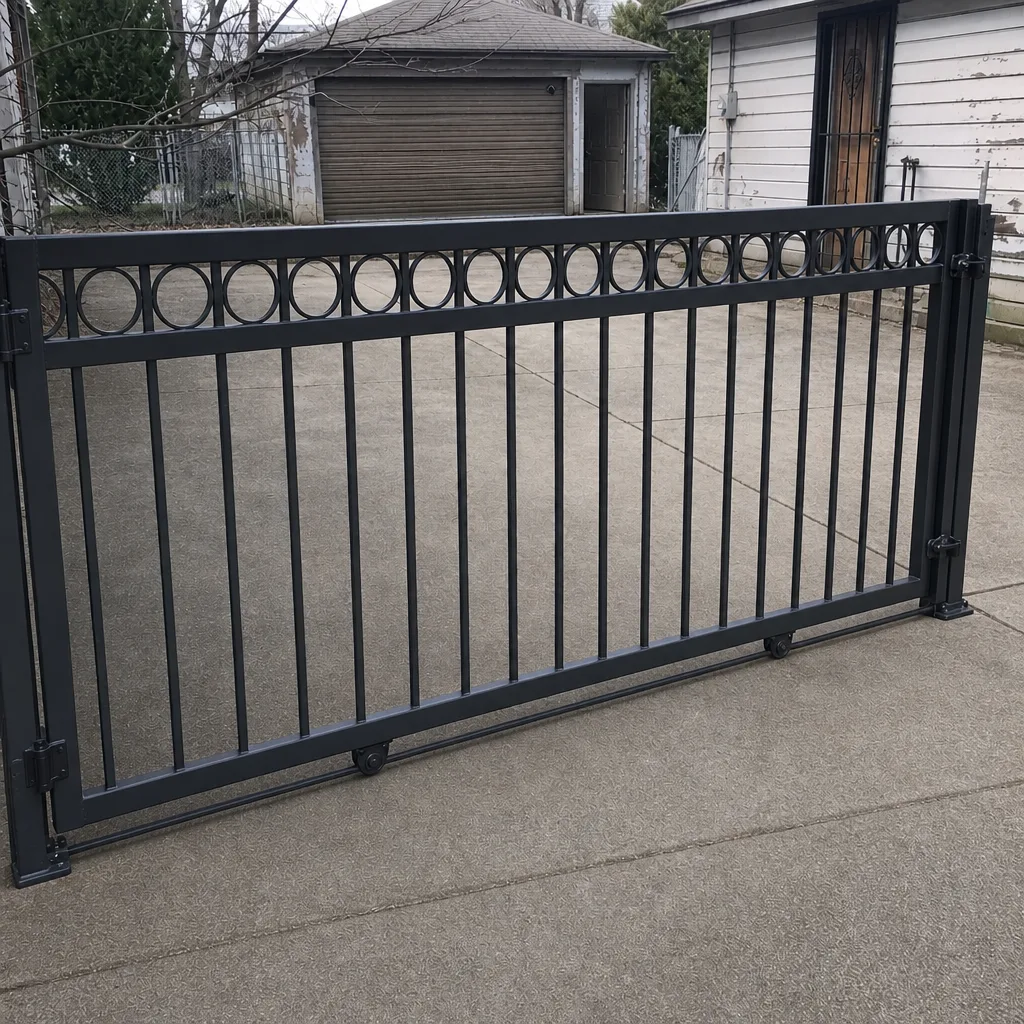 After
When to Call a Professional
Call a professional when the gate stops, reverses at the wrong time, or won’t respond to the remote; when a photo-eye or safety edge is damaged; when the operator cycles but the gate won’t move; when the gate is out of plumb after a freeze; or when the job involves new wiring, a new operator, or a structural change. These are the cases where a permit, an inspection, or a safety-device correction is likely in play, and where a gate-only specialist is worth the call. Gate Repair Joliet offers free estimates in Joliet, and our team can tell you which work is routine and which needs a permit before anything starts. Call (855) 360-8227. We answer 24/7. Fast dispatch from 7am to 7pm, Sunday through Friday.
Frequently Asked Questions
Most routine gate repairs don’t need a permit, but new electrical circuits, new wiring, and structural changes such as height or setback changes do. Ask the City of Joliet’s building department before the work starts if you’re unsure which category your repair falls into. Call (855) 360-8227 for an exact quote if you’d like us to look at the job and tell you what’s likely required.
It depends on the swap. Replacing an operator with the same type on an existing permitted circuit is often routine; a new operator that requires new power, new wiring, or different safety devices usually needs an electrical permit and an inspection. When the operator type changes, plan the permit before the parts are ordered. Call (855) 360-8227 for a free estimate and we’ll help you sort out which side of the line your job falls on.
Illinois requires entrapment protection on automated gates, which in practice means working photo-eyes, safety edges, loop detectors, a functioning manual release, and a working reversing function, matched to the gate type and location. A repair that touches those devices must leave them functional and compliant. Call (855) 360-8227 if your gate has a safety device that isn’t responding.
The inspector reviews the permitted scope: the electrical connection, the entrapment devices (tested live), the manual release, the full gate cycle, and any height or setback changes. Have the permit, plans, and access to the disconnect ready, and clear the gate’s travel path. Call (855) 360-8227 to schedule a pre-inspection check if you want a technician to confirm everything is in shape first.
Request the permit records from the City of Joliet’s building department using the property address, and check whether the permit was finaled. If it’s missing or incomplete, ask the city what it takes to close it now rather than later. Call (855) 360-8227 if you’d like a technician to look at the installation and flag what’s likely to need attention.
Yes. If an automated gate injures someone and the installation wasn’t permitted or inspected, the insurer can point to non-compliant work when evaluating coverage. It’s also a resale issue, since buyers and their inspectors ask for the paper trail. Call (855) 360-8227 to schedule a free estimate and get the installation checked before a claim or a sale puts it under a microscope.
The Bottom Line
Gate repair in Joliet is routine only when the scope stays small: hinges, latches, wheels, a same-type control board, a replaced sensor. Once an electrical circuit, new wiring, a changed operator type, or a structural change enters the picture, permits and inspection are part of the job. Illinois entrapment protection requirements apply to every automated gate, and bypassing a safety device is a liability, not a shortcut. Check the permit history on any gate you didn’t install, and check the setback if a repair moves the gate. A gate specialist who works across FAAC, BFT, Linear, and other systems can usually sort out what’s routine and what’s not in one visit. Call (855) 360-8227 for a free estimate. We answer 24/7. Fast dispatch from 7am to 7pm, Sunday through Friday.
Written by the team at Gate Repair Joliet.