
Last updated November 16, 2026
 Wrought iron
 Wood & steel frame
 Farm & ranch
 Sliding driveway gates
 LiftMaster operators
Free on-site gate assessment - hinges, posts, and your LiftMaster or Nice gate operator checked before anything is quoted
The assessment is free and the quote is the invoice.
Get your free estimateGate Repair Maintenance Schedule: What to Do and When
The most expensive gate repair we see in Joliet each year doesn’t start with a broken motor or a dead control board. It starts in March, after the ground thaws and a post quietly shifts a quarter inch, and nobody looks. Through April and May the hinges take the stress instead, and by June a gate that needed a wrench in spring needs new hardware. A gate maintenance schedule isn’t “oil it once a year.” In Illinois, it’s a calendar built around four distinct seasons and the mechanical events each one triggers. This guide walks through what to check month by month, what lubrication goes on what component, and how to catch a repair 60 to 90 days before it becomes a service call.
Quick Answer
A workable gate maintenance schedule for a Joliet property runs on four touchpoints: a pre-freeze inspection in October, a mid-winter visual check, a post-thaw inspection in March that catches shifted posts and stressed hinges, and a summer pass on the operator’s motor and battery. Lubricate hinges and rollers every 60 to 90 days depending on use, but keep grease off rack-and-pinion drives; those take a dry spray lubricant. Most of this takes 20 minutes per pass, and the operator checks – battery, control board, safety edges – are where a technician earns the visit.
Styles & brands we work with
- Wrought iron
- Wood & steel frame
- Farm & ranch
- Sliding driveway gates
- LiftMaster operators
Table of Contents
- Why Joliet Gates Need a Four-Season Schedule
- The October Pre-Freeze Inspection
- The March Post-Thaw Inspection: The Most Important Pass
- Summer Heat and the Automatic Gate Operator
- Lubrication by Component: What Goes Where
- Battery and Solar Panel Maintenance Timing
- Early-Warning Signs That a Repair Is 60 – 90 Days Out
- What You Can Do in 20 Minutes vs. What Needs a Technician
Why Joliet Gates Need a Four-Season Schedule
Joliet sits in a climate that swings hard: freeze-thaw cycles in late winter, deep cold in January, humid summers that push an operator harder than the temperature alone suggests. A gate is an outdoor machine bolted to a footing in soil that expands and contracts with moisture and frost. Every component has one job and every season attacks a different one.
The gate itself – the panels, hinges, and frame – never stops being tested by weather. A properly built gate moves with a few pounds of hand pressure. That changes the moment the ground under a post shifts, and the change is usually invisible until the gate won’t latch. In our experience, the failure pattern in Joliet goes one of two ways:
- October through March belongs to cold and moisture. Wood swells, then dries and cracks. Metal contracts. Hinges tighten. Operators run at low temperatures without the battery capacity they have in summer.
- April through September belongs to heat, UV, and use. Motor housings run hot. Battery terminals corrode faster in humidity. Hardware loosens as everything cycles between morning cool and afternoon heat day after day.
Automatic gates add a third layer. An operator is electronics outdoors, and electronics fail differently in cold than in heat. Winter saps backup batteries. Summer overheats control boards that sit in direct sun. A schedule built on a single “annual service” visits each system at one point on that curve and misses the other.
If you’re just getting started or wondering whether your existing gate is worth servicing at all, our gate repair service covers the diagnosis. For most properties, here in Joliet, the answer is that a well-maintained gate outlasts a neglected one by years. The schedule is how you get there.
The October Pre-Freeze Inspection
October is the gate’s deadline. Everything you want secured before the first hard freeze has to happen while the ground is still soft enough to dig if a footing turns out to be the problem, and while you can still move hardware without cracking frozen wood.
Work through this in order:
- Walk the full swing or slide path. Note any point where the gate drags, catches, or needs a nudge. Mark it now – you’ll compare the same point in March.
- Check the hinges by lifting the gate. Grasp the free end and lift. More than a quarter inch of play means hinge wear. On a driveway gate in Joliet, worn hinges are the most common cause of a gate that scrapes its own hardware by spring.
- Inspect posts for movement. Look for soil pulled away from the post base, cracks at the concrete collar, or a post that leans. A post that shifts in frozen soil pushes the whole gate out of alignment.
- Test the latches and stops. A latch that needs force now will seize by January. Adjust or replace before cold sets in.
- Look at the operator’s battery backup. If your automatic gate has a backup battery, note its condition. Cold cuts capacity, and a battery already weak in October will fail in the first cold snap.
- Clear drains and gutters near the gate. Water pooling at the base of posts is what freezes and heaves them. Landscaping changes made over summer often redirect water toward a gate without anyone noticing.
- Clean the photo-eye and safety-edge sensors. Late-season pollen, dust, and the first falling leaves blur lenses and flatten rubber edges.
That last point matters more than it sounds. On an automatic gate, a blocked safety edge or dirty photo-eye causes the operator to reverse or refuse to close. Many of the “gate won’t close” calls we get in Joliet each fall trace back to an obstruction in the safety circuit, not a failed control board. Cleaning is free. A false diagnosis is not.
The March Post-Thaw Inspection: The Most Important Pass
Spring is when the damage done over winter shows up, and it’s when you have the best chance to catch a small problem before it becomes a big one. The March pass is the single most valuable inspection on this entire schedule, and it’s the one most homeowners skip.
Here’s why. During a thaw, the soil under a gate post softens and refreezes, often several times. A post that was plumb when winter started can shift slightly, and a shift at the base is amplified at the far end of a gate panel. Meanwhile, hinges stressed by months of cold and binding are at their weakest. If you don’t check in March, a gate whose hinges are already 60 days from failing gets another 60 days of punishment before anybody looks.
Run this checklist once the ground has softened and the gate has been frozen in place:
- Repeat the drag test from October. Compare it to your notes. Any new drag point or increased binding is a signal.
- Check post plumb. A level against the side of the post is a two-minute test. A leaning post means the footing has moved, and no amount of hinge adjustment fixes that.
- Inspect hinges for corrosion and play. Spring is when galvanized and painted hardware shows what winter did to it. Tighten, oil, or replace.
- Test the operator’s limits. Run the gate fully open and fully closed. The travel stops need to land cleanly. If the gate reverses at the end of travel or overshoots, the limit switches have drifted.
- Run the safety-edge test. Press the edge while the gate is closing and confirm it reverses, and the same with the photo-eye beam. If either fails, don’t use the gate’s automatic mode until it’s fixed.
- Check the battery voltage. A backup battery that survived winter weak will finish failing by summer. This is the moment to test it.
One warning about the operator itself: if you find a control board, wiring, or motor issue during the March pass, don’t open anything. Electric gate repair means working with live power, charged capacitors, and heavy panels that can crush a hand if the gate moves unexpectedly. That work belongs with a person who does it every day. Our electric gate repair service covers control boards, loop detectors, and motor assemblies, including on Mighty Mule and LiftMaster systems you may already own.
Summer Heat and the Automatic Gate Operator
Heat stress on an automatic gate operator isn’t the mirror image of cold. It’s a different failure mode entirely. Cold drains batteries and makes metal brittle. Heat drives control boards over their operating temperature, thins lubricant so it stops coating, and accelerates corrosion on terminals and connectors.
What summer asks of you:
- Check operator housing. If the enclosure or motor housing is in direct sun, the internal temperature climbs well past air temperature. Confirm vents are clear of debris and cottonwood fluff, which is a real problem here in midsummer.
- Watch for slow travel or hesitation. An operator that’s heating up moves sluggishly. If the gate takes noticeably longer to open on a hot afternoon than a cool morning, note it.
- Inspect for moisture and corrosion. Summer humidity works on battery terminals and connector pins. A little dielectric grease on a terminal can head off a circuit board failure.
- Re-check the safety devices. Summer dust and summer traffic mean the safety edge and photo-eye need a second pass. Ask anyone who uses the gate daily to report anything odd.
- Test the manual release. On a hot day when the operator fails, the manual release is what gets you out. It must work. This is a five-minute check that takes ten seconds to do, and skipping it is how people get stuck.
If your gate is a LiftMaster or FAAC system, the summer pass on the control board and motor should be done with a technician. In our experience, most board failures we diagnose in Joliet trace back to heat and moisture in combination, and a technician who knows those boards can tell you whether a part is failing or has failed.
Lubrication by Component: What Goes Where
This is where well-meaning maintenance does the most damage. A homeowner who greases every moving part on a gate usually makes it worse. The problem isn’t the choice of brand; it’s that a gate has several different kinds of moving parts, and they need different lubricants.
- Hinges: A dry-film lubricant or a lithium-based grease. What you want is a coating that stays put. Plain light oil runs off and collects grit. A heavy grease collects grit. A thin film of the right product is the middle.
- Rollers (on sliding gates): A light grease rated for outdoor use, applied sparingly. Rollers need the race surfaces coated, not packed. Over-greasing a roller attracts dust, and dust makes a roller bind.
- Rack-and-pinion drives (on slide gates): A dry spray lubricant, not grease. A rack and pinion is an open-toothed drive, and grease on it does one thing: it gathers grit that grinds the teeth down. This is the single most common lubrication mistake we see, and it turns a cheap replacement into a drive-drive replacement.
- Track and guide rails: Wire-brush, then light oil. A slide gate’s track holds water and debris. Keeping it clean and lightly oiled matters more than what you put on the motor.
- Locks and latches: A graphite or dry lube so they don’t collect the dirt that jams them in cold weather. Never put an oil-based product in a lock you’ll rely on in January.
The three products that actively accelerate wear on gate hardware are heavy grease on rack and pinion, WD-40 as a long-term lubricant (it’s a solvent and displaces water, but it doesn’t stay as a lubricant), and any grease applied over existing grit. For the average Joliet gate, a hinge lube and a dry spray on the drive is the whole kit.
Battery and Solar Panel Maintenance Timing
Most homeowners touch the backup battery only when the gate fails at midnight. That’s backwards, because the battery is exactly the component you can check in ten minutes and know its condition in advance.
The short version: test the battery going into cold weather (October) and again coming out of it (March). A gate on solar has a third timing point: check the panel itself in late winter when the sun angle is low and in late spring when pollen and leaves have covered it.
A practical sequence:
- Find the battery. On most residential operators, including Mighty Mule and BFT models, it’s a sealed battery in the operator housing or an external enclosure.
- Check the terminals. Look for white or green corrosion. Clean and protect. Corroded terminals make a good battery act like a failing one.
- Test the voltage with the gate in manual. Consult the operator’s manual for the expected numbers, because they differ by system.
- Test under load. If you can, run a full open-close cycle on battery power alone and see whether the gate completes it.
- Plan for solar. If your gate runs on solar, a panel that’s shaded, dirty, or angled poorly charges the battery incompletely, and the operator pays for it in extra cycles and shorter lifespan.
Batteries are consumables. They fail eventually, and knowing when yours is close lets you replace it on your schedule instead of a panicked call on a cold morning. If you’ve never checked yours, that’s the first task we’d suggest adding to the calendar.
Early-Warning Signs That a Repair Is 60 – 90 Days Out
The point of any maintenance schedule is to catch a repair on your terms. Below are the signs that a component is nearing failure, sorted by the season you’re most likely to see them in. Each one gives you a window of 60 to 90 days to plan a repair instead of an emergency.
- Increased hinge play (spring and fall): A gate that lifts more than a quarter inch is on its way to scraping and binding. Replace the hinge and the gate stays aligned. Skip it and the gate’s frame takes the load.
- A drag point that moves (spring): If a drag you noted in October has moved or gotten worse, a post has shifted. This is a footing repair, and waiting is not free.
- Operator reversing on its own (summer): An operator that reverses without an obvious obstruction usually has a failing safety edge or a photo-eye problem. If it’s intermittent now, it’ll be constant later.
- Slow travel or hesitation (summer and winter): Either the battery is going or the motor is heating. Either one gives you time to plan the repair.
- Battery voltage falling short (fall): A battery that doesn’t reach its rated voltage in October will be weaker in January. Replace before cold.
- Control-board error codes (any season): A code that appears now and then is a component failing slowly. Note the code when it appears; it makes the eventual diagnosis faster.
- Loose hardware (any season): Bolts that loosen in a week were probably loosening for a month. Tighten and check again; if they loosen again, something is out of alignment.
For a gate specialist working on the nine major operator brands, a symptom like intermittent reversing is a diagnosis, not a mystery. That’s the value of calling before the gate fails: the repair is planned, and you know the cost before anything comes apart.
What You Can Do in 20 Minutes vs. What Needs a Technician
Most gate maintenance is genuinely homeowner-level work. Some of it isn’t, and knowing which is which is how you avoid making a small problem into a large one.
You can handle these yourself in 20 minutes or less:
- Cleaning the photo-eye lenses and safety edge.
- Lifting the gate to check hinge play – and tightening hardware that’s merely loose.
- A visual drag walk through the full swing or slide path.
- Wire-brushing and oiling the track on a slide gate.
- Cleaning operator housing vents and solar panels.
- Checking battery terminal corrosion and visual condition.
These tasks should go to a technician:
- Any diagnosis inside the operator housing – control boards, motor assemblies, capacitors, wiring. Live power and stored energy mean this is not a homeowner task.
- Anything that involves a post or footing. A post that needs resetting has to come out of the ground and be set at the right depth with the right material. Guessing here just means doing it twice.
- Limit switch or travel adjustment – simple in theory, but a wrong adjustment can make a gate strike its own stop with force, which damages what’s already there.
- Battery testing that involves internal components – if you have to open the housing and probe it with a meter, that’s a technician’s check.
- Any gate that’s hard to move by hand. If the gate is bound up, whatever caused it may be structural. A technician should look before any operator is run against it.
A one-time maintenance visit priced per job is a fine way to reset the calendar after a season of neglect, and it’s how we’d recommend starting if you’ve never been through this process. If you’re not sure about your gate, our team at Joliet is a phone call away.
Common Mistakes to Avoid
- Greasing a rack and pinion drive. Grease on an open-toothed drive collects grit and grinds the teeth down. It’s the fastest way to turn a cheap component into a major repair, and it’s the mistake we see most often.
- Skipping the March inspection. Winter does the damage and spring reveals it. Skip March and you’ll spend April and May letting the hinges do the work.
- Using WD-40 as gate lubricant. It’s a water displacer and solvent, not a long-term lubricant. On a hinge or track it’ll be gone in a couple of weeks and taking the existing coating with it.
- Ignoring weather-exposed hardware during summer. A Joliet summer is humid enough to drive corrosion on terminals and connectors even inside a housing. A quick inspection saves a future electrical call.
- Adjusting limit switches without checking alignment. If a gate’s limits have moved, the cause is often a shifted post or worn hinge, not the limit itself. Adjusting the limit just hides the real problem until it gets worse.
- Treating the battery as “probably fine.” Backup batteries fail silently and with no warning, usually in the cold. Test them in October and replace what’s weak.
- Running an automatic gate with a jammed gate. If the gate is hard to move on manual, don’t let the operator push it. That’s how hinges and gears get damaged on top of whatever caused the jam.
See the difference
 Before
 After
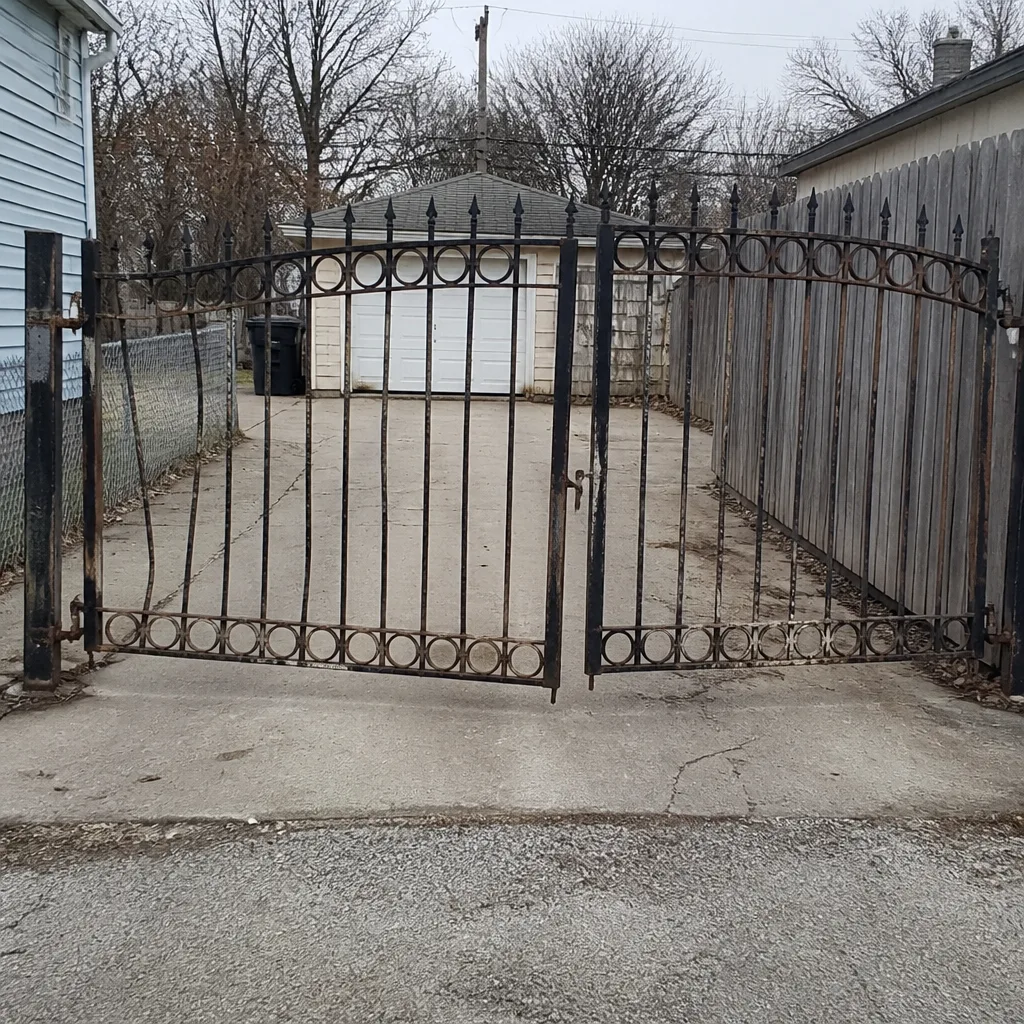 Before
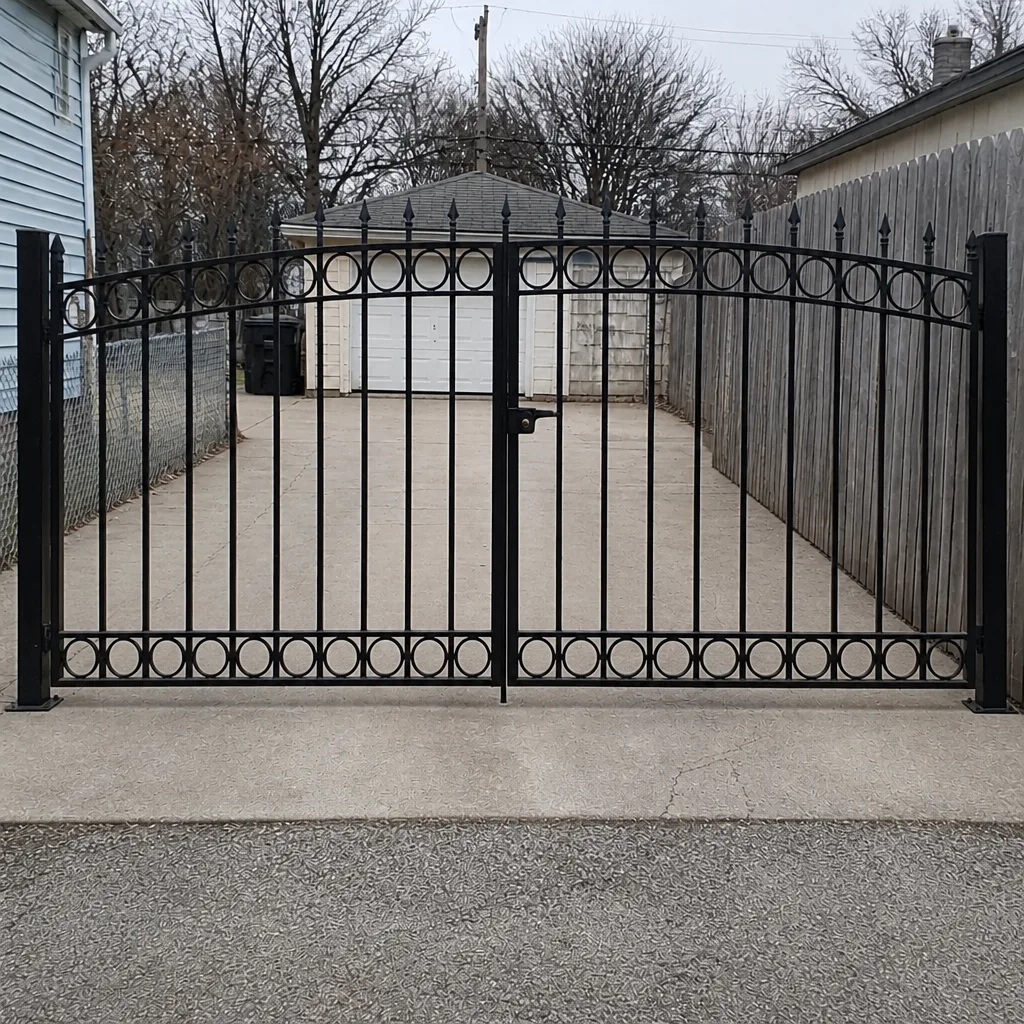 After
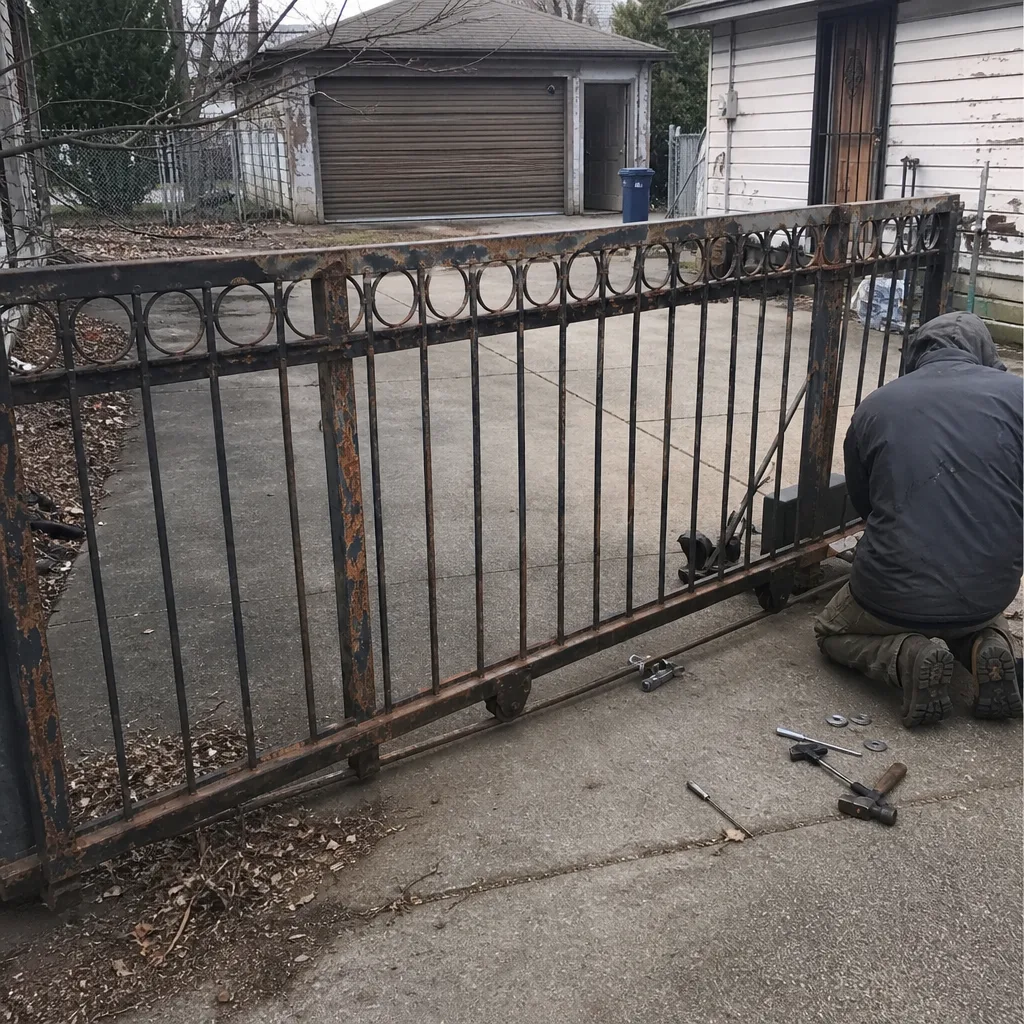 Before
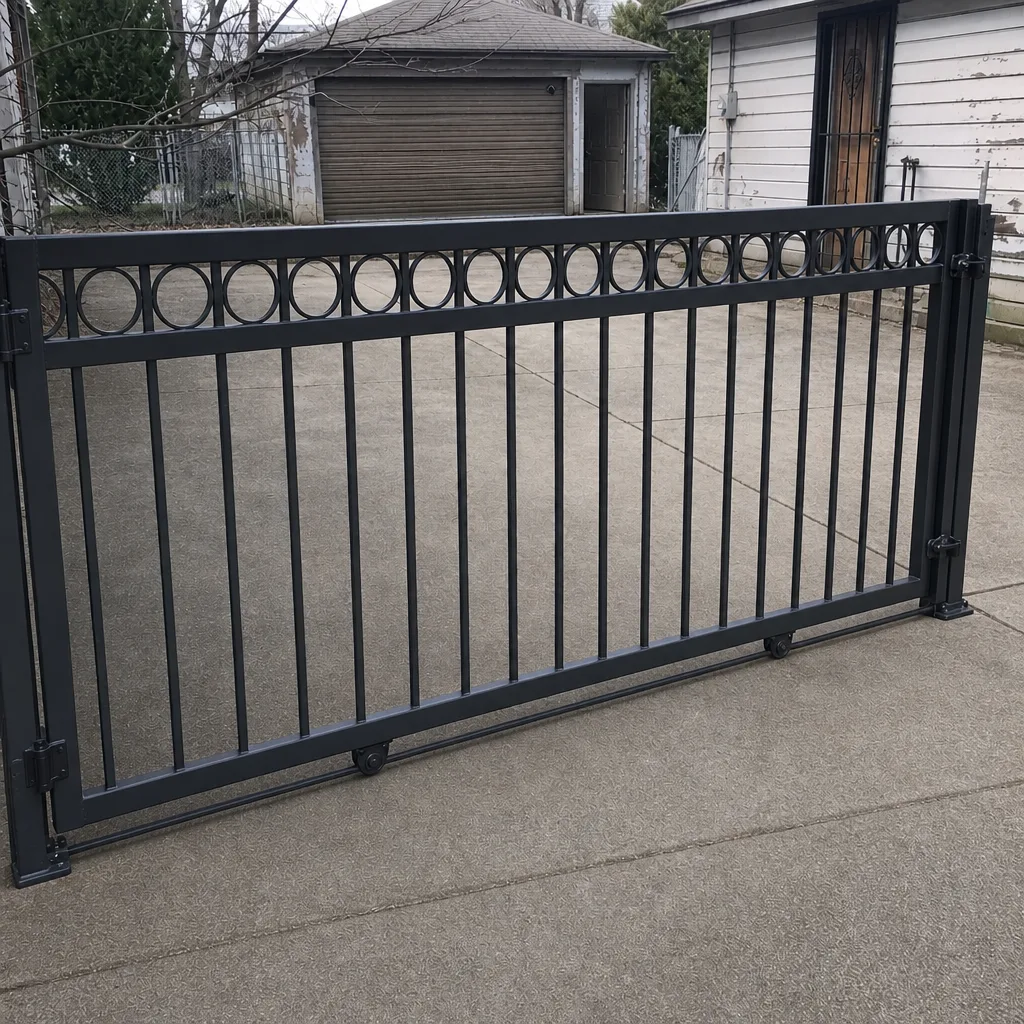 After
When to Call a Professional
Call a professional gate repair service rather than self-maintaining when the work touches any live electrical component, when a post has moved, when the gate itself is hard to move by hand, or when the operator doesn’t respond to a clean battery and clear safety devices. Also call when a fault appears intermittent: intermittent faults are the hardest to fix without proper diagnostic equipment, and running a gate with a failing safety or control board risks damage to the gate and anyone near it.
Gate Repair Joliet offers free estimates in Joliet. Our technicians have up to 13 years of experience, and we work on electric gate repair as our core focus, not as a side service. Call (855) 360-8227. We answer 24/7. Fast dispatch from 7am to 7pm, Sunday through Friday.
Frequently Asked Questions
Once in the fall before the first freeze and once in the spring after the thaw, with a visual check in summer. That’s the minimum for an automatic gate. If your gate gets heavy use, add a mid-summer inspection. The maintenance visit itself is priced per job after we look at the gate, so the pace can match what the equipment actually needs rather than a fixed package.
The March post-thaw inspection is the most important. It catches winter damage before it becomes spring damage. Skip March and a shifted post or worn hinge puts stress on components that were fine in February. A professional diagnosis in March is what we’d suggest for any gate with a history of sticking or binding.
Yes, you can safely lubricate hinges, rollers, tracks, and latches yourself. Use a dry-film lubricant or lithium grease on hinges, a light outdoor grease on rollers, a dry spray on rack-and-pinion drives, and graphite or dry lube on locks. Avoid grease on open drives and avoid WD-40 as a long-term lubricant. If you’re unsure what you’re looking at, ask before applying anything.
Most of these failures trace to a backup battery that’s lost capacity. Cold cuts battery performance, and a battery that’s already weak will not carry the gate when the mains power drops. If your gate fails repeatedly in cold weather, the battery is the first thing to test. We can run that check during a service visit and tell you whether a replacement is needed.
The core schedule is the same, but solar adds one task: panel cleaning and sun-angle checks. In late winter, low sun and short days reduce charging. In late spring and summer, dust and pollen do the same. Clean the panel as part of the spring and fall passes, and check that trees haven’t grown to shade it. A solar gate whose panel is shaded charges poorly even when the battery is fine.
Hinge play over a quarter inch, a drag point that appears or moves, an operator that reverses on its own, slow travel on hot or cold days, and control-board codes that appear now and then. Each means a component is wearing down, and each gives you roughly 60 to 90 days to plan the repair. If you can call before the failure, the repair stays simple and the estimate stays accurate. Call (855) 360-8227 for a free estimate; we cover every gate-only repair we can schedule.
The Bottom Line
A gate maintenance schedule for Joliet runs on four touchpoints: October before the freeze, a visual pass in deep winter, the all-important March post-thaw inspection, and a summer check on the operator and battery. Lubricate hinges and rollers with the right product and keep grease off rack and pinion. Treat the backup battery as a scheduled item, not a surprise. Watch for the early-warning signs – a drag point, hinge play, intermittent reversing, slow travel – and you’ll catch a repair 60 to 90 days out. That’s the whole point: a maintenance schedule is how you keep small problems small. Our technicians have up to 13 years of experience, and we’re gate-only specialists – our team works on LiftMaster, FAAC, BFT, Mighty Mule, and the other major operators every day.
Whether you’re starting fresh with a new gate or maintaining one you already have, our Gate Repair Joliet team can walk the schedule with you. Call (855) 360-8227 for a free estimate. We answer 24/7. Fast dispatch from 7am to 7pm, Sunday through Friday. It’s your gate diagnosed, repaired, and moving again.
Written by the team at Gate Repair Joliet.